
Greek mythology is filled with gods, monsters, heroes, wars, lost kingdoms and extraordinary journeys. But beneath these stories lies a more difficult question: could some Greek myths preserve memories of real people, places and events from the distant past?
The question becomes especially interesting when we look at the Greek Dark Ages, the centuries between the collapse of the Mycenaean palaces and the emergence of the Greek city-states.
This was a period with far fewer written records than the civilizations that came before and after it. Much of what we know comes from archaeology, while the stories of Homer and later Greek tradition preserve memories of an older world.
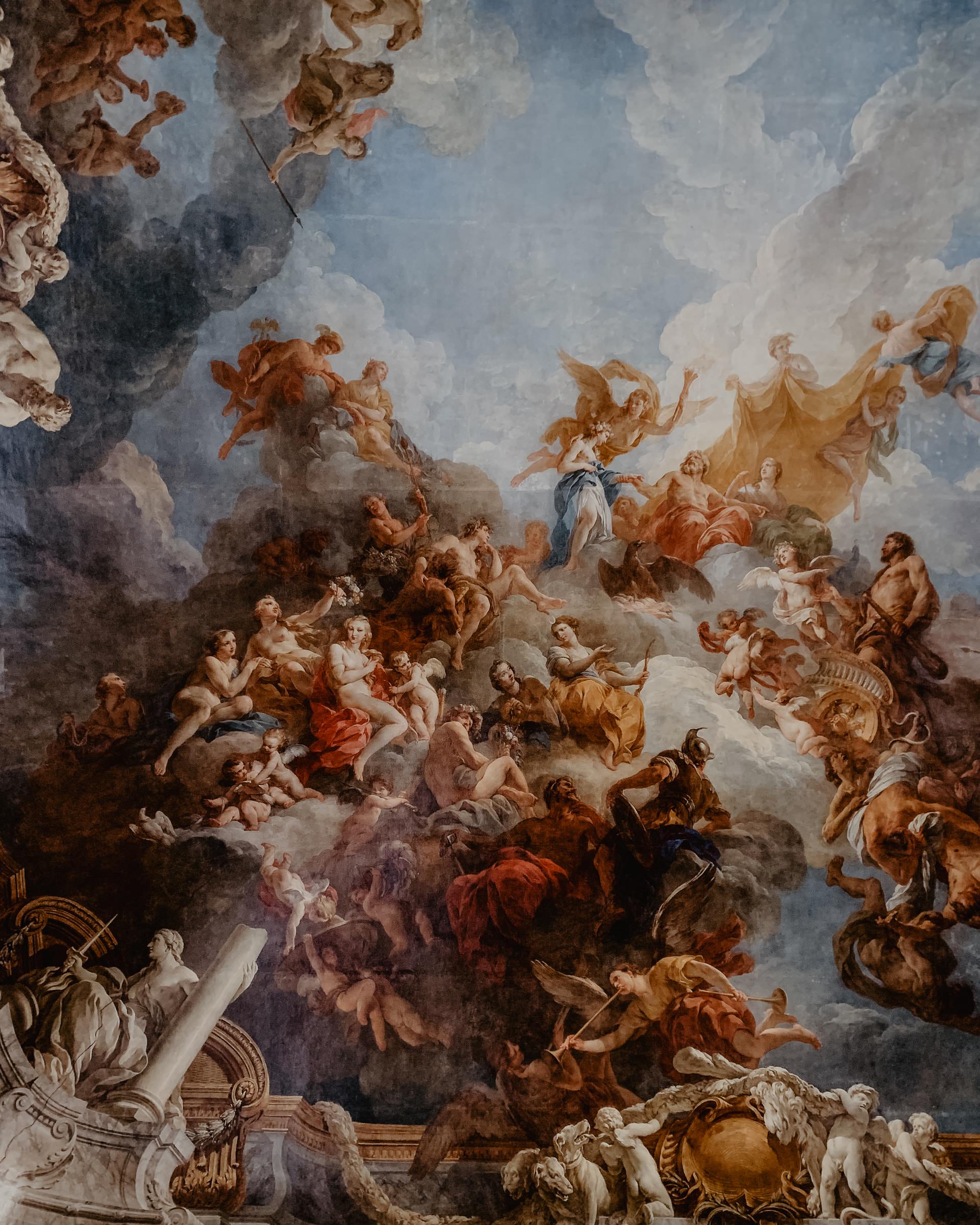
That does not mean that Greek mythology is simply distorted history. The relationship between myth and history is much more complicated.
What Were the Greek Dark Ages?
The term Greek Dark Ages generally refers to the period following the collapse of the Mycenaean palace system, roughly from the end of the 11th century BC until the beginning of the 8th century BC.
The word “Dark” does not mean that Greece became completely primitive or that nothing happened during these centuries. It mainly reflects the scarcity of surviving written evidence compared with the Mycenaean period and the later Archaic and Classical periods.
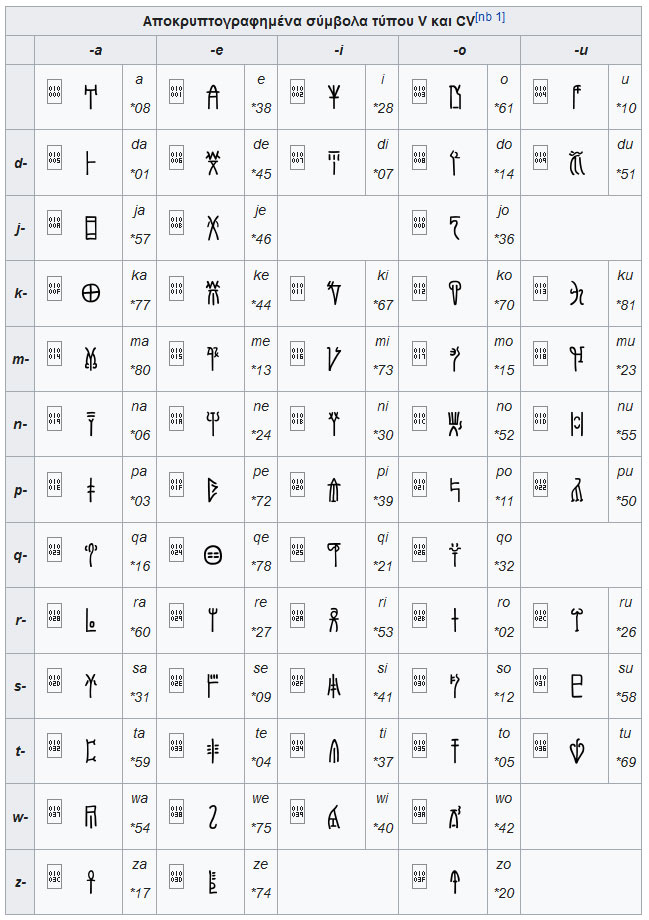
The Mycenaean palaces used Linear B, an early form of written Greek, for administrative records. After the palace system collapsed, Linear B disappeared from use.
For several centuries, there is no comparable body of Greek written material.
This creates an unusual historical gap.
We have archaeological evidence of settlements, graves, pottery, trade and changing social structures, but relatively little contemporary written testimony telling us how people understood their own world.
Then, centuries later, Greek poets began telling stories about heroes, kings and wars that were supposedly much older.
This is where mythology becomes particularly interesting.
Homer and the Memory of an Earlier Greece
The poems traditionally attributed to Homer, especially the Iliad and the Odyssey, are among the most important sources for understanding how later Greeks imagined the heroic past.
They tell of the Trojan War, Achilles, Agamemnon, Odysseus, Hector and many other figures.
But the poems were not written down immediately after the events they describe.
They developed through an oral tradition and were eventually written down centuries after the period traditionally associated with the Trojan War.
This makes them neither straightforward historical records nor simple inventions.
The world described by Homer contains elements that appear to belong to different periods. Some features resemble the Mycenaean Bronze Age, while others reflect the society in which the poems themselves developed.
Weapons, political institutions, social customs, places and religious practices can therefore represent a mixture of memories and later developments.
This is one reason historians and archaeologists have long debated the relationship between Homeric poetry and the historical past.
Was the Trojan War a Historical Event?
The Trojan War is perhaps the most famous example.
Homer presents the conflict as a massive war between the Greeks and Troy, caused by the abduction of Helen and involving kings and warriors from across the Aegean world.
Archaeology has established that a major ancient settlement existed at Troy, at the site of Hisarlik in modern Turkey.
Several different cities were built there over many centuries, and some of them show evidence of destruction.
That does not prove that Homer’s Trojan War happened exactly as described in the Iliad.
There is no archaeological evidence for Achilles fighting Hector, Helen being taken to Troy, or the Trojan Horse.
However, the existence of Troy and the wider evidence for connections and conflicts between Aegean and Anatolian societies make the possibility of historical events behind some Trojan traditions worth considering.
The important distinction is between a possible historical memory and a historical account.
A real conflict could have contributed to a much larger legendary tradition.
Myth Can Preserve Memories Without Preserving Facts
Oral traditions can survive for generations.
But they do not remain unchanged.
Stories are retold, expanded, simplified and adapted to new audiences. Characters can become larger than life, different events can become connected, and historical places can acquire legendary associations.
Over a long period, the original event may become almost impossible to recognize.
Imagine a story being transmitted for several centuries without written records. The existence of a tradition does not guarantee that every detail remains accurate.
At the same time, the fact that a story contains supernatural elements does not automatically mean that every historical element within it is meaningless.
A myth can preserve a memory of a place, a migration, a war, a dynasty or a cultural change while transforming the original event into something very different.
This may be one of the most useful ways to approach Greek mythology historically.
The Gods and the Memory of Older Civilizations
Greek mythology also preserves traces of a much older religious world.
The names of several Greek gods appear in Mycenaean Linear B tablets, showing that at least some of the deities worshipped in later Greece were already known during the Bronze Age.
The tablets include forms of names associated with gods such as Zeus, Poseidon and others.
This is significant because it demonstrates cultural continuity across a period in which the political and economic structure of Mycenaean Greece collapsed.
The later Greek religion was not simply created from nothing after the Dark Ages.
Some religious traditions survived and changed over time.
The same may be true of stories.
A myth transmitted from one generation to another could preserve an ancient name or tradition even while the original meaning changed.
From the Mycenaeans to the Greeks of the Archaic Age
The collapse of the Mycenaean palace system around the end of the Bronze Age was a major transformation.
The palaces disappeared, long-distance networks were disrupted and the political structure of the Aegean changed.
But the people themselves did not disappear.
Communities continued to live in Greece, and over the following centuries new forms of society developed.
By the 8th century BC, Greece was entering a very different period.
Writing returned in the form of the Greek alphabet, cities became increasingly important, overseas settlements expanded, and Greek communities developed stronger connections across the Mediterranean.
The Greek world of the Archaic Age was therefore not simply a continuation of Mycenaean civilization, but neither was it completely disconnected from it.
Some traditions survived the transformation.
Mythology may be one of the places where fragments of that older cultural memory remained visible.
What About the Minoans?
The relationship between mythology and history becomes even more complicated when we look further back to Minoan Crete.
The Minoan civilization flourished during the Bronze Age and developed impressive palaces at places such as Knossos.
The Minoans used a writing system known as Linear A, which has not yet been deciphered.
This means that we still cannot read most of the written records they left behind.
The later Mycenaeans adopted and adapted the writing system that we call Linear B, which has been deciphered and records an early form of Greek.
This gives us an intriguing contrast.
We can read many of the Mycenaean administrative tablets, but Linear A remains largely inaccessible.
Consequently, much of what we know about Minoan society comes from archaeology rather than from texts written by the Minoans themselves.
Did Greek Myth Remember the Minoan World?
Later Greek mythology contains many stories associated with Crete.
The most famous is the story of Minos, Ariadne, the Minotaur and the labyrinth at Knossos.
It would be tempting to treat the myth as a direct historical description of the Minoan palace at Knossos.
But there is no evidence that the Minoans actually told the story of the Minotaur in the form known from later Greek mythology.
The connection between the myth and the archaeological site is therefore an interpretation, not an established historical fact.
Nevertheless, the story is interesting because later Greeks clearly remembered Crete as a place of extraordinary antiquity and power.
The mythological King Minos became associated with a civilization that had disappeared centuries earlier.
This illustrates the broader problem with using mythology as historical evidence.
A story may preserve a genuine memory while changing its meaning completely.
The Pelasgians and the Problem of Ancient Names
Greek mythology and ancient Greek literature also contain references to peoples such as the Pelasgians.
Ancient authors sometimes used this name for populations associated with Greece before or alongside the Greeks.
But there is no simple archaeological or linguistic definition of a single “Pelasgian people” that can be applied to all these references.
Ancient names were not always used in the same way by different authors.
This is another reason to be cautious.
Ancient literary traditions can provide valuable clues, but they must be compared with archaeology, linguistics and other evidence rather than treated as straightforward historical documentation.
Can Mythology Tell Us About the Greek Dark Ages?
This is where the question becomes particularly interesting.
Homer’s poems may contain memories of the Bronze Age.
They may also contain elements from the centuries in which the poems developed.
And some features may reflect the society of the early Iron Age.
Rather than representing one specific historical period, the Homeric world may therefore be a layered memory of several periods of Greek history.
The same principle can be applied more broadly to Greek mythology.
Stories about ancient kings may preserve memories of old political centers.
Stories about migrations may preserve distant memories of population movements.
Stories about wars may have developed from real conflicts.
Stories connected with ancient places may preserve traditions that survived after those places had changed or disappeared.
But none of these possibilities can be accepted automatically.
Historical investigation requires independent evidence.
Myth, Archaeology and History
Archaeology has repeatedly changed the way we understand the ancient Greek world.
Before the discoveries at places such as Troy, Mycenae and Knossos, many legendary traditions were treated very differently.
Archaeology demonstrated that the civilizations behind some of the stories were real.
But archaeology has also shown why the stories cannot simply be read as historical documents.
The world uncovered by archaeologists is often more complicated than the world presented by epic poetry.
A ruined palace does not prove the story of its legendary king.
A destroyed city does not prove the details of a war described centuries later.
A familiar divine name does not prove that later myths preserve the original Bronze Age religion unchanged.
Instead, archaeology provides another layer of evidence that can be compared with literary traditions.
When the different types of evidence overlap, our understanding becomes stronger.
So, How Much History Is Hidden in the Myths?
Probably more than the myths themselves can tell us, but less than we might hope.
Greek mythology is not a secret history book of the Greek Dark Ages.
It is the product of centuries of storytelling, religious tradition, cultural change and memory.
Yet it would also be too simple to dismiss it as pure fantasy.
Some traditions may preserve distant memories of real places, people and events. Others may preserve older religious ideas or cultural practices. Still others may have been created or transformed long after the events they supposedly describe.
The challenge is separating these different layers.
The Greek Dark Ages left relatively few written records of their own. Later Greek literature therefore provides an unusual window into how Greeks remembered the distant past.
But that window is not clear glass.
It is more like a mosaic, made from fragments belonging to different periods.
Homer, mythology, archaeology, linguistics and the surviving Bronze Age evidence can each provide part of the picture.
The most interesting question is therefore not whether Greek mythology is true or false.
It is this:
How much of the ancient past survived in the stories that Greeks continued to tell?
That question remains open, and it is one of the reasons Greek mythology continues to be valuable not only as literature, but also as a fascinating source for exploring the long and complicated history of Greece.