The ancient Greeks looked at the sky and saw both order and chaos. The weather could bring life-giving rain or destructive lightning. This dual nature was perfectly reflected in Zeus, the king of the gods. His divine authority was absolute, yet his rule was constantly undermined by his own uncontrollable desires. His relationships—with his wives, his lovers, and mortals—were not just gossip; they were the mythological explanation for the birth of heroes and the founding of Greek cities.
Zeus’s relationships are among the most complicated family stories in Greek mythology. The king of the gods was married to Hera, but his many relationships with goddesses, nymphs, and mortal women produced some of the most important gods, heroes, and royal families in Greek myth. These relationships were not simply a collection of love affairs. They connected Zeus to other gods, heroic dynasties, and cities across the Greek world, while often creating conflict with Hera and with the people caught between them.
Hera: Zeus’s Wife and Divine Equal
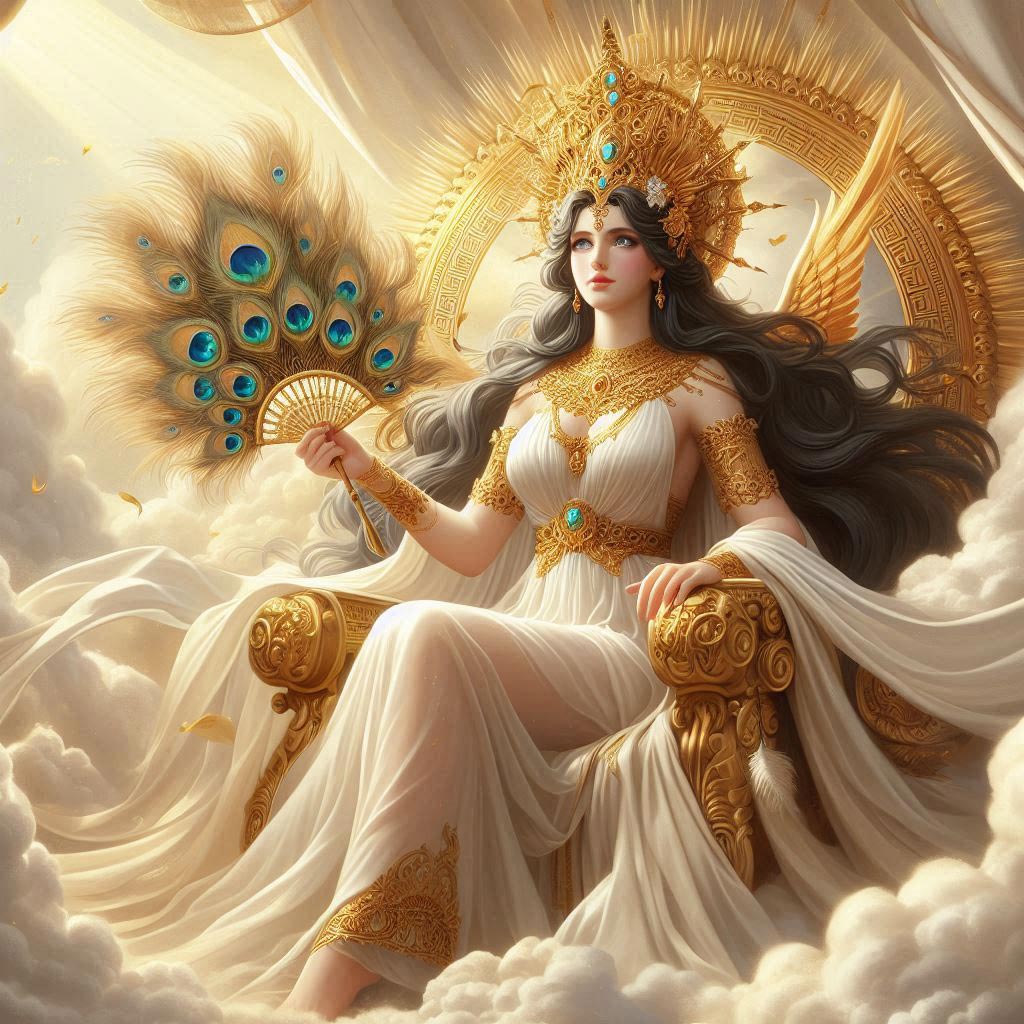
At the center of Zeus’s complicated family life was Hera, his sister and wife. Their relationship was hardly a peaceful marriage, but it was one of the most important divine partnerships in Greek mythology.
Hera was the goddess of marriage and the protection of married women. Zeus, meanwhile, was repeatedly involved with other goddesses, nymphs, and mortals. The resulting conflicts became a recurring theme in myth.
Hera’s anger was often directed not at Zeus himself but at the women connected with him and at their children. Her persecution of Heracles, for example, became one of the defining forces of his story.
Yet reducing Hera to a jealous wife misses her importance. She was one of the great Olympian goddesses in her own right, with her own authority, cults, temples, and myths. Her difficult marriage to Zeus is therefore also a story about two powerful gods whose interests did not always coincide.
Zeus and Leto: The Parents of Apollo and Artemis
Leto, a daughter of the Titans Coeus and Phoebe, became the mother of two of the most important Olympian gods through her relationship with Zeus: Apollo and Artemis.
According to myth, Hera was hostile toward Leto because she was carrying Zeus’s children. Leto wandered in search of a place where she could give birth and eventually found refuge on Delos, where Apollo and Artemis were born.
The importance of this relationship goes far beyond the romance itself. Apollo and Artemis became major gods of Greek religion, associated respectively with prophecy, music, healing, light, hunting, wilderness, and childbirth.
Through Leto, Zeus therefore became the father of two deities who occupied an important place in both Greek mythology and ancient religious life.
Alcmene: Zeus and the Birth of Heracles
Among Zeus’s relationships with mortal women, Alcmene is one of the most famous because their son was Heracles, the greatest of the Greek heroes.
Zeus approached Alcmene while her husband Amphitryon was away, taking Amphitryon’s appearance. The resulting union produced Heracles, while Alcmene’s actual husband later became the father of Heracles’s mortal half-brother Iphicles.
Heracles’s divine ancestry did not make his life easy. Hera, angered by Zeus’s relationship with Alcmene, became one of his greatest enemies. Her hostility contributed to the suffering and trials that eventually defined his heroic career.
Heracles ultimately became immortal and joined the gods on Olympus. His story is therefore one of the clearest examples of how a relationship between Zeus and a mortal could produce a figure who stood between the human and divine worlds.
Danaë: Zeus, the Golden Rain, and Perseus
Danaë was another mortal woman whose relationship with Zeus produced a major Greek hero: Perseus.
Danaë was imprisoned by her father Acrisius because of a prophecy that her future son would cause his death. Zeus nevertheless reached her in the form of golden rain, and Perseus was born from their union.
Perseus later became famous for killing Medusa and rescuing Andromeda. His descendants were also important in Greek heroic traditions.
The story shows one of the recurring patterns in myths about Zeus: his relationships with mortal women frequently become the starting point for stories about heroes, kingdoms, and famous family lines.
Semele: Zeus and the Birth of Dionysus
Semele, a mortal princess of Thebes, was the mother of Dionysus, one of the most unusual members of the Greek pantheon.
Semele asked Zeus to reveal himself to her in his full divine glory. Zeus had promised to grant her request and could not withdraw his oath. When he appeared in his divine form, the mortal Semele could not survive the sight.
Zeus rescued their unborn child and, in the best-known version of the story, carried the developing Dionysus in his thigh until the god was ready to be born.
Dionysus eventually became the god associated with wine, ecstasy, theatre, celebration, and altered states of consciousness. His unusual birth is fitting for a deity whose mythology repeatedly crosses the boundaries between order and chaos, humanity and divinity.
Zeus and the Other Gods: Relationships Beyond Romance
Zeus’s relationships with the other gods were not limited to romantic affairs. As ruler of Olympus, he was at the center of an enormous divine family whose members could be allies, rivals, spouses, children, or all of these at different points in the myths.
His relationship with Poseidon and Hades was especially important. The three were brothers who divided the cosmos after overthrowing the Titans. Zeus received the sky, Poseidon the sea, and Hades the underworld.
His relationship with Athena was equally unusual. She was Zeus’s daughter, famously born from his head after he swallowed her mother Metis. Athena became one of the most powerful Olympian gods and was closely associated with wisdom, strategy, and the protection of cities.
Zeus also fathered Hermes with the nymph Maia and was associated with several other divine offspring in different mythological traditions.
These family connections help explain why Zeus appears at the center of so many Greek myths. His relationships were also relationships between gods, and through them the Olympian family was constantly expanding and rearranging itself.
Some of Zeus’s Other Famous Partners
The five relationships above are among the best-known, but they are far from the whole story. Greek mythology preserves many traditions about Zeus and other goddesses or nymphs, and the details sometimes differ between ancient authors.
- Europa — Zeus approached Europa in the form of a bull. Their son Minos became the legendary king of Crete.
- Io — Zeus’s relationship with Io led to a long and difficult myth involving Hera, transformation, and the wandering of Io.
- Mnemosyne — Zeus and the Titaness Mnemosyne were said to be the parents of the nine Muses.
- Themis — In Greek tradition, Zeus and the Titaness Themis were associated with the Horae and, in some traditions, the Moirai.
- Eurynome — The Oceanid Eurynome was traditionally described as the mother of the three Charites, or Graces, by Zeus.
- Aegina — Zeus’s relationship with the nymph Aegina produced Aeacus, an important figure in later heroic genealogies.
- Dione — In the Homeric tradition, Dione is the mother of Aphrodite, while other traditions give Aphrodite a different origin. Zeus’s relationship with Dione belongs to this more complicated layer of Greek divine genealogy.
Not every ancient source tells these stories in exactly the same way. Greek mythology was not a single fixed system, and different poets, cities, and periods preserved different versions of divine genealogies.
Why Does Zeus Have So Many Relationships?
The sheer number of Zeus’s partners can seem strange when viewed through the expectations of a modern biography. But these myths were not originally designed as one continuous story about Zeus’s private life.
His relationships often explained something larger: the origin of a god, the ancestry of a hero, the foundation of a royal family, or the connection between a particular people and the divine world.
That is why Zeus repeatedly appears as the father of important figures from completely different traditions. His mythology connects Olympus with Crete, Thebes, Argos, Mycenae and other places across the Greek world.
His relationships therefore form something like a vast mythological family tree. Follow the branches and Zeus eventually leads to gods, heroes, kings, monsters, and entire heroic traditions.
Zeus: God, Husband, Father and Trickster
Zeus’s relationships reveal several sides of his character at once. He is the supreme Olympian god, but he is also a husband who repeatedly breaks the expectations associated with marriage, a father whose children become some of mythology’s most famous figures, and a shape-shifter who frequently uses disguise to approach mortals.
His relationship with Hera provides the conflict. His relationships with goddesses expand the divine family. His relationships with mortal women connect Olympus to the heroic world.
Even today, the concept of a flawed, all-powerful leader resonates deeply in Greek culture and Western thought. These myths remind us that in the ancient worldview, even the king of the sky was subject to fate, and the divine was never as perfect as it seemed.