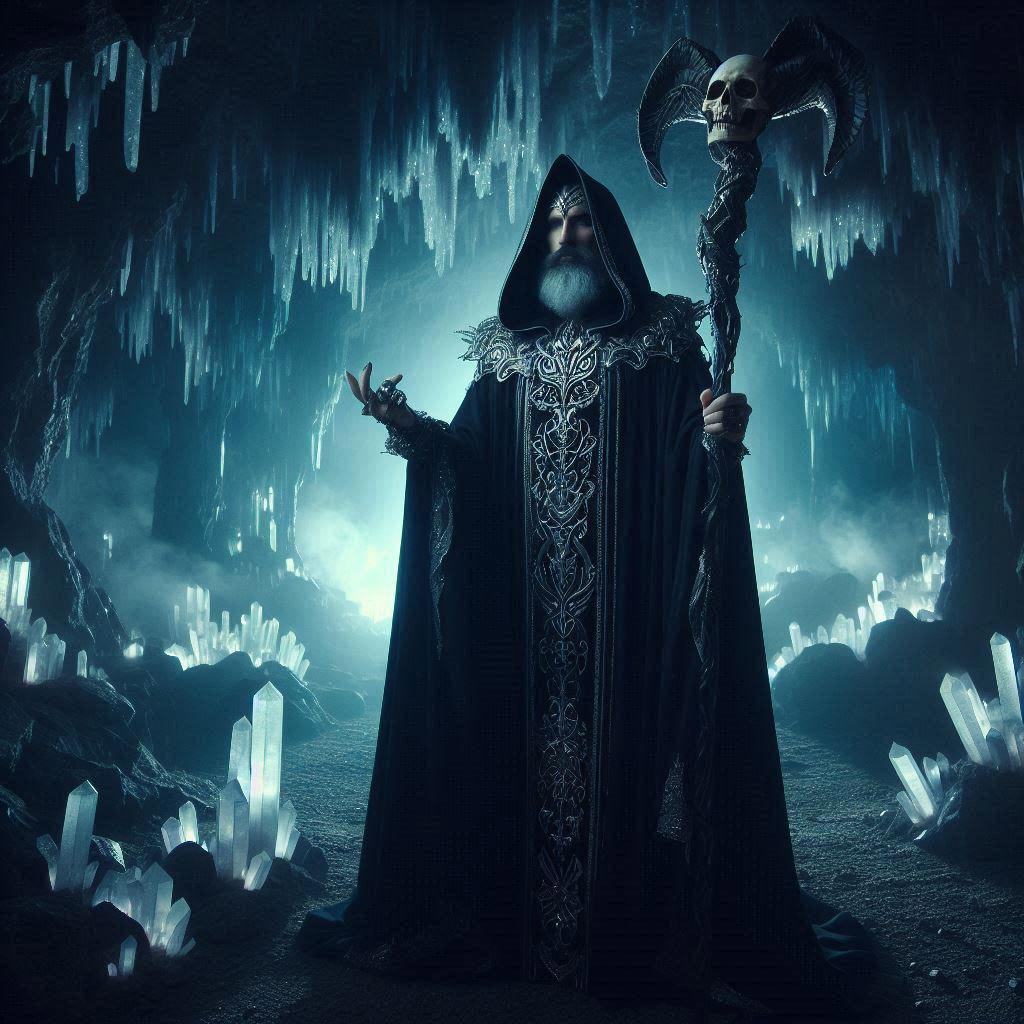
The gods ruled the sky and the sea, but beneath the earth lay the final destination of all mortal souls. This realm is dedicated to Hades, the Underworld, and the ancient chthonic traditions of Greece—the dark, silent, and deeply mysterious side of Greek mythology.
Unlike the bright, chaotic world of the Olympians, the Underworld was a place of absolute finality. But for the ancient Greeks, it was not just a myth. It was a physical reality. They believed that the entrances to Hades existed in the real landscape of Greece—in deep caves, at the mouths of dark rivers, and in the shadowy chasms of the earth.
The Realm of Hades
Hades was the brother of Zeus and Poseidon, but he drew the lot of the Underworld. He was not a god of evil or punishment; he was the stern, unyielding enforcer of the boundary between life and death. His realm was vast, guarded by the three-headed dog Cerberus, and divided by the rivers Styx and Acheron.
The Underworld was a complex geography of the afterlife, featuring the Asphodel Meadows, the torturous depths of Tartarus, and the paradise of the Elysian Fields. The myths of Hades are not just stories of death; they are reflections on justice, memory, and the inescapable nature of fate.
The Chthonic Gods and the Living Superstitions of Today
The ancient Greeks had two distinct ways of interacting with their gods. The Olympian tradition involved the sky, the city, and the bright, rational world. The chthonic (earth/underworld) tradition involved the earth, the night, and the dead.
What is fascinating is that this ancient chthonic tradition never truly died, despite the arrival of Christianity. Even today, in modern Greek villages, ancient superstitions about the “evil eye” (the mati), the restless dead, and the wandering spirits of the night (like the neraidhes) are very much alive. The ancient fear of the dark earth still lingers beneath the surface of modern Greek life.
Where the Ancients Entered the Underworld
The Greeks did not just imagine the realm of Hades; they actively searched for it in the landscape of their own country. They identified specific caves and rivers as physical portals to the dead. The most famous was the Nekromanteion (the Oracle of the Dead) on the banks of the Acheron river. Deep caves, such as the cave of Trophonius or the entrance at Cape Tainaron, were believed to be literal gateways to the realm of Hades.
From Ancient Rituals to Modern Greece
This ancient relationship with the earth and the dead has not disappeared. The traditions have evolved, but the deep cultural connection to the earth, the bones of the ancestors, and the rituals of mourning still linger. In this section, we explore the myth of Hades, the terrifying reality of the chthonic cults, and how the ancient Greeks navigated the boundary between the living and the dead.