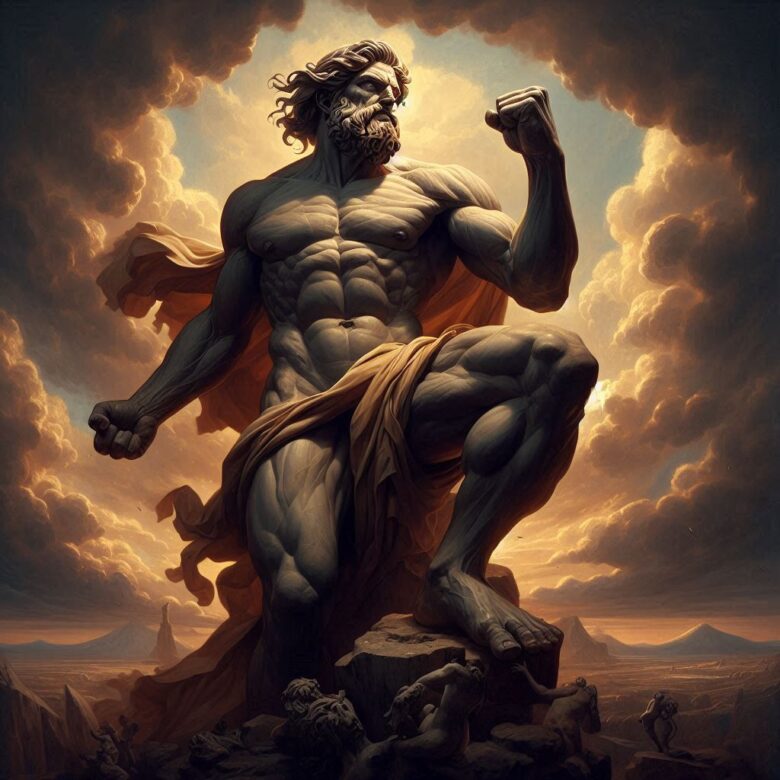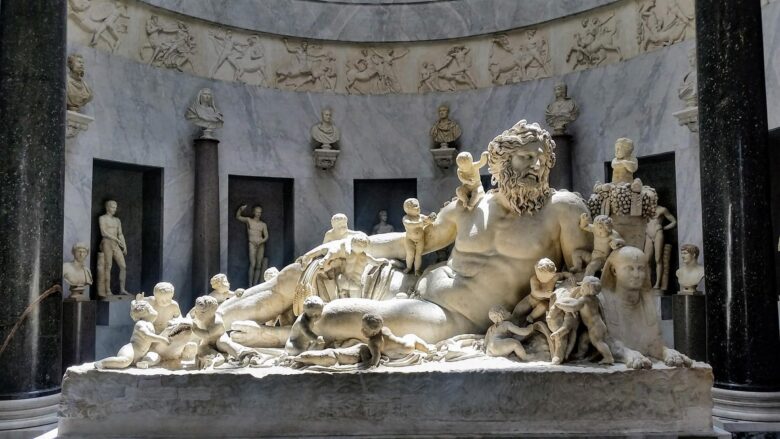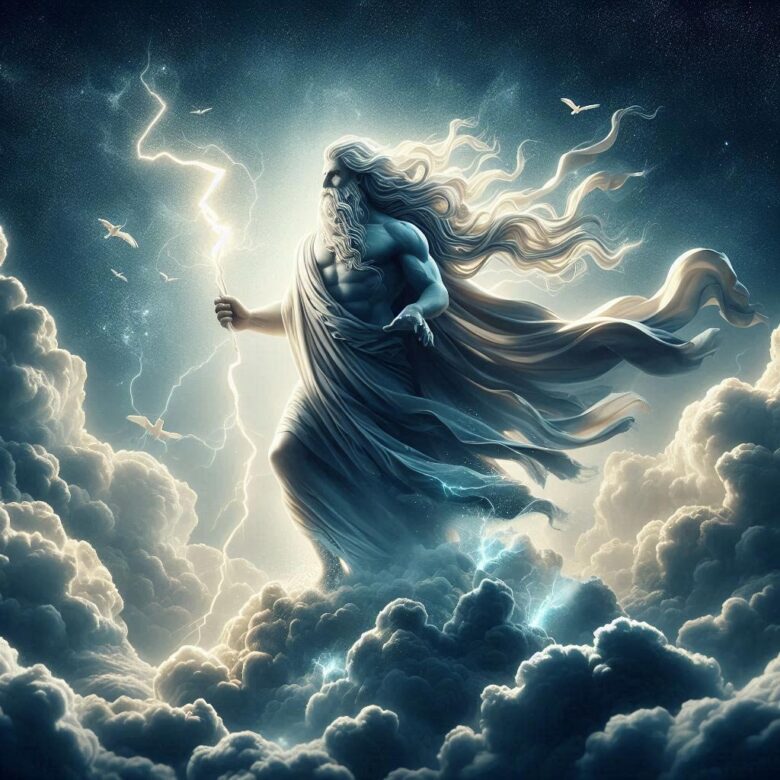
Mount Olympus is a real, physical boundary between the earth and the heavens. But the council of gods who ruled from it was never a fixed number. The list of the ‘Twelve’ shifted depending on the city-state you were in, reflecting the fragmented geography of ancient Greece. The gods were not just a heavenly family; they were a reflection of the political and territorial divisions of the mortal world below.
⚡ Quick Guide: The 12 Olympians & The Missing Gods
- The Twelve: The gods most commonly named among the Olympians are Zeus, Hera, Poseidon, Demeter, Athena, Apollo, Artemis, Ares, Aphrodite, Hephaestus, Hermes, and Dionysus. In some traditions, Hestia replaces Dionysus.
- No official master list existed: Ancient Greek religion didn’t operate with a single, fixed roster of twelve gods. Different cities, writers, and periods could emphasize different deities.
- Why is Hades not an Olympian? Hades was one of the three brothers who defeated the Titans, but his realm was the Underworld rather than Mount Olympus. He is therefore normally excluded from the Twelve.
- Hestia or Dionysus? Hestia is sometimes counted among the Twelve, and Dionysus sometimes replaces her in later tradition. The familiar story that Hestia simply surrendered her throne to prevent a divine civil war is a modern simplification, not a standard ancient account.
- Other powerful gods: Persephone, Hecate, Helios, and others could be enormously important without being members of the Twelve Olympians.
- The Corfu connection: Poseidon is one of the Twelve and is closely connected with the ancient story of Kerkyra, the nymph after whom Corfu was traditionally named.
The 12 Olympian Gods Were Never Quite as Simple as Twelve
The phrase “12 Olympian gods” makes the Greek pantheon sound remarkably tidy. Twelve gods, twelve places, one divine council on Mount Olympus.
But ancient Greek mythology was not tidy.
The Twelve Olympians are usually named as Zeus, Hera, Poseidon, Demeter, Athena, Apollo, Artemis, Ares, Aphrodite, Hephaestus, Hermes, and Dionysus. Yet Hestia can appear in place of Dionysus, while some people naturally wonder why Hades — brother of Zeus and Poseidon and one of the most powerful gods of all — is missing.
That apparent contradiction is actually one of the most interesting things about the Olympians.
There was no single ancient Greek scripture establishing a permanent membership list. Greek religion developed over centuries and differed from one place to another. The number twelve had an important symbolic and religious role, and groups of twelve gods are attested in different contexts, but the exact membership was not universally identical.
So when we ask who the 12 gods of Olympus were, we are really asking which gods became the most widely recognized members of a particular divine group.
And that makes the missing gods almost as interesting as the ones who made the list.
The Twelve Olympians were the dominant generation of gods in many Greek myths, but they were not the only important gods. Hades ruled the dead, Persephone ruled the Underworld alongside him, Hecate had an important place in religious practice, and Helios remained the personification of the sun. Being outside the Twelve did not make a god insignificant.
The Olympians were simply a particular group.
Among the many gods of the Greek world, the Olympians became the divine family we most often imagine gathered on Mount Olympus.
The Greek Gods family tree
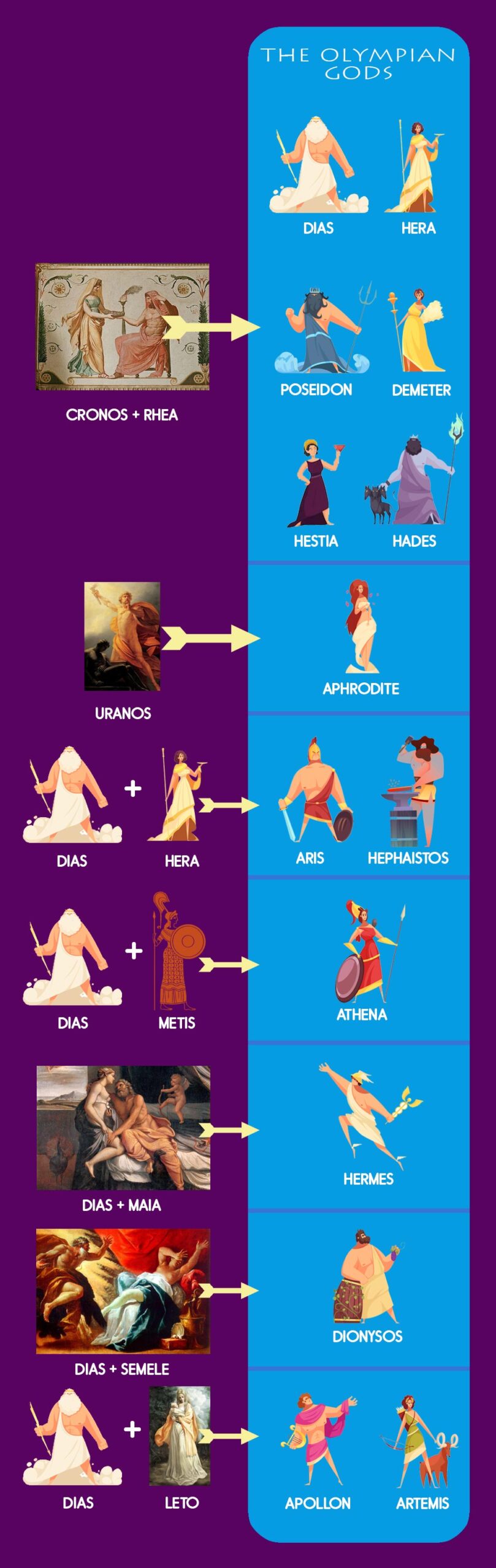
The family relationships make the question of the Twelve even more interesting.
The Olympians belong largely to the generation that followed the Titans. Zeus, Poseidon and Hades were sons of Kronos and Rhea, while Hera, Demeter and Hestia were their sisters. The younger gods included figures such as Athena, Apollo, Artemis, Ares, Hermes and Dionysus, although their individual stories and origins vary considerably.
The Titan generation and the Olympians therefore form less of a simple family tree than a succession of divine generations, rivalries and alliances.
After Zeus and his siblings defeated the Titans, the three brothers divided the major realms among themselves. Zeus received the sky, Poseidon the sea, and Hades the Underworld. The earth itself was not simply divided into three separate kingdoms in the same way; the gods continued to compete for influence over particular places.
That distinction helps explain something that is often misunderstood: Hades was one of the great gods of the generation that defeated the Titans, but he was not normally counted among the Twelve Olympians.
The word “Olympian” is therefore doing more work than simply meaning “important Greek god.”
The gods associated with Olympus could have very human personalities. They loved, argued, competed, deceived, helped mortals and sometimes behaved with astonishing cruelty. Their stories were not designed to present a perfectly harmonious divine family. Quite the opposite: the tensions between them are part of what makes Greek mythology so enduring.
The 12 Olympian Gods (Who Makes the List?)
If we use the most familiar traditional list, these are the twelve:
Dias (Zeus)
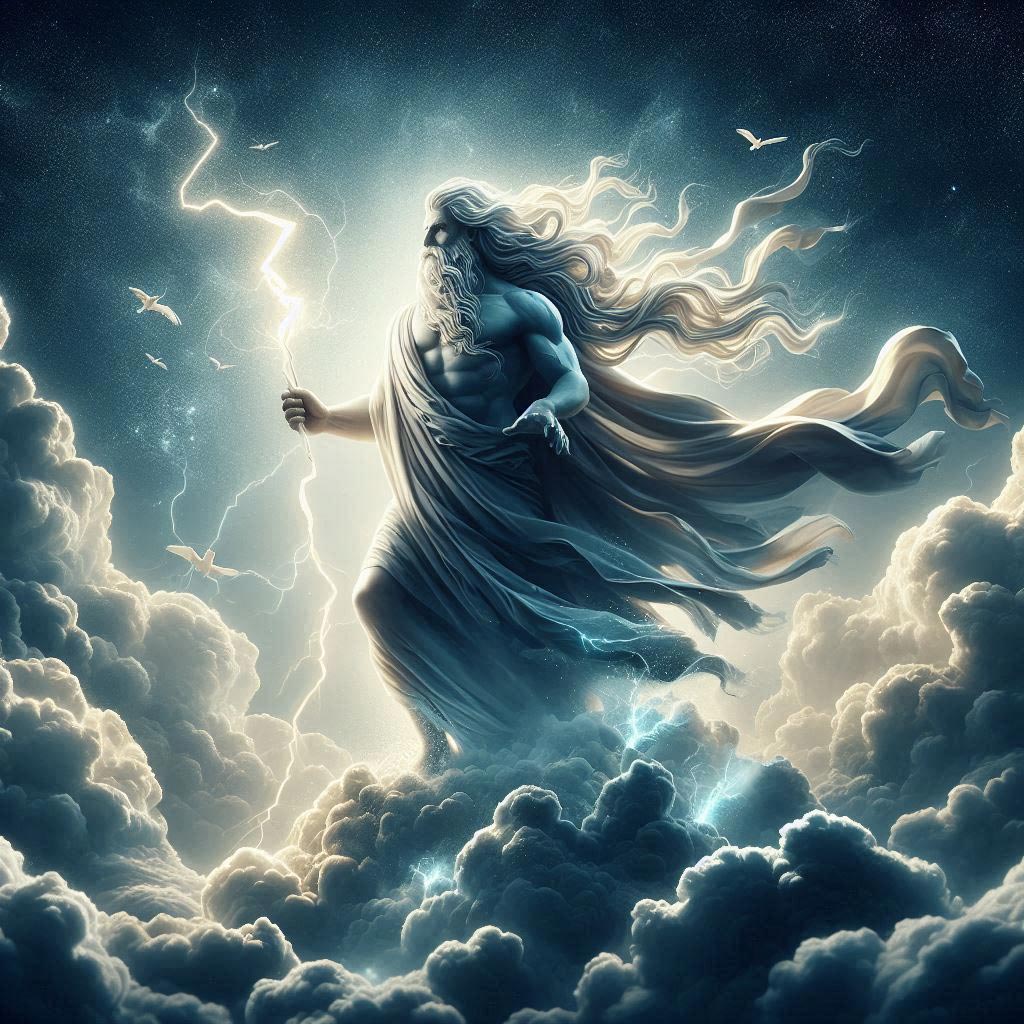
Dias or Zeus (Latin: Jupiter) was the god of the sky, thunder, kingship, and the maintenance of divine and social order. His thunderbolt became the most recognizable symbol of his power, but Zeus was not simply a weather god.
His authority was connected with justice, oaths, hospitality and the protection of guests. These aspects of Zeus reveal something important about Greek religion: divine power was closely connected with the rules by which human communities were expected to live.
Zeus became king of the gods after the overthrow of Kronos and the Titans. He did not create the world from nothing; his position came from a struggle between generations of gods.
And Zeus himself was hardly an image of perfect justice. His numerous affairs and the conflicts they caused are among the recurring themes of Greek mythology. The same god who protected oaths and hospitality could also behave in ways that created misery for gods and mortals alike.
Perhaps that contradiction is precisely why Zeus remained such a powerful figure. He represented authority without being a model of human virtue.
Hera
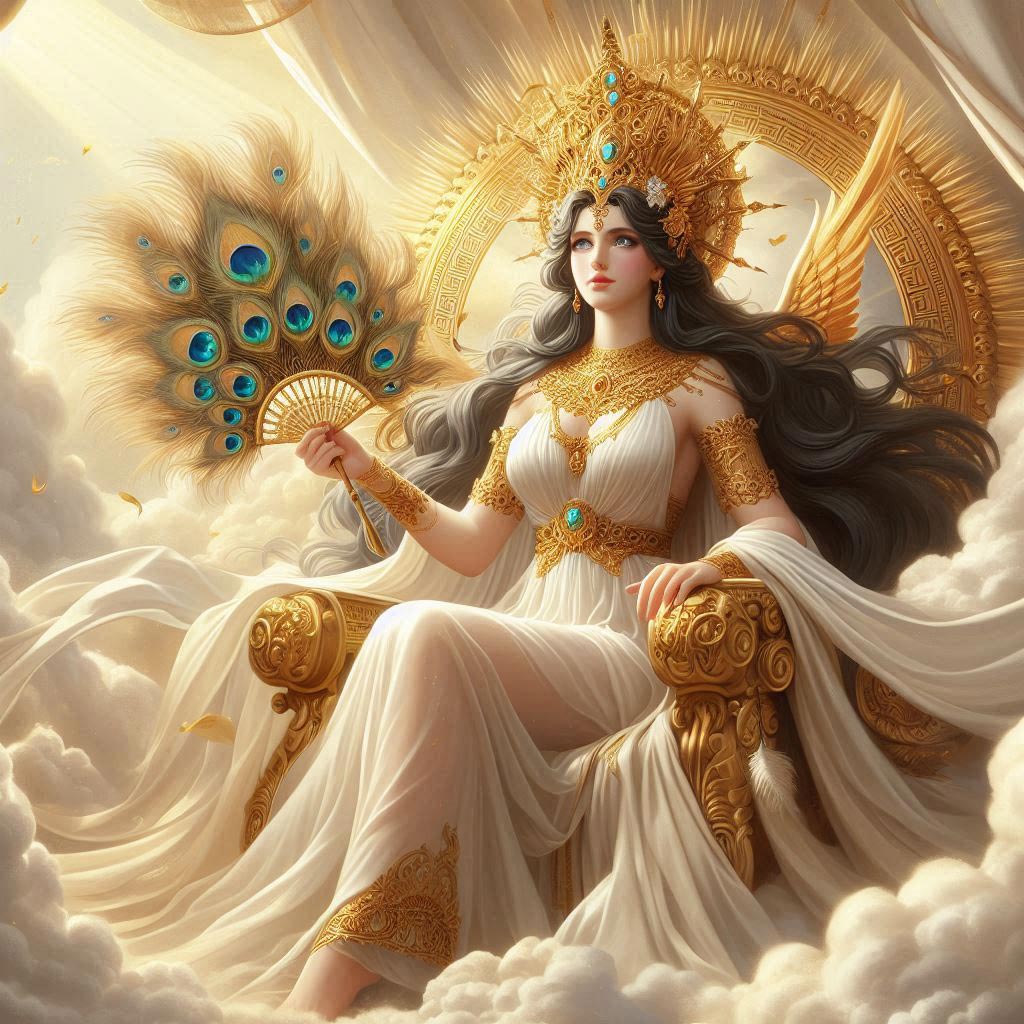
Hera (Latin: Juno) was both sister and wife of Zeus and queen among the gods. Her principal associations included marriage, women and legitimate family life, and her worship was particularly important at places such as Argos and Samos.
Greek mythology, however, rarely leaves Hera as simply the benevolent goddess of marriage.
The endless infidelities of Zeus turn her into one of the most formidable figures in his stories. Her anger is often directed not at Zeus alone but at his lovers and their children. Her persecution of Heracles is one of the clearest examples.
There is an uncomfortable irony here. Hera represented the institution of marriage while being married to perhaps the least faithful husband in Greek mythology.
Rather than smoothing out that contradiction, the myths preserve it. Hera is powerful, proud, jealous, and sometimes terrifying — a goddess whose position gives her authority but whose marriage continually undermines the order she represents.
Poseidon
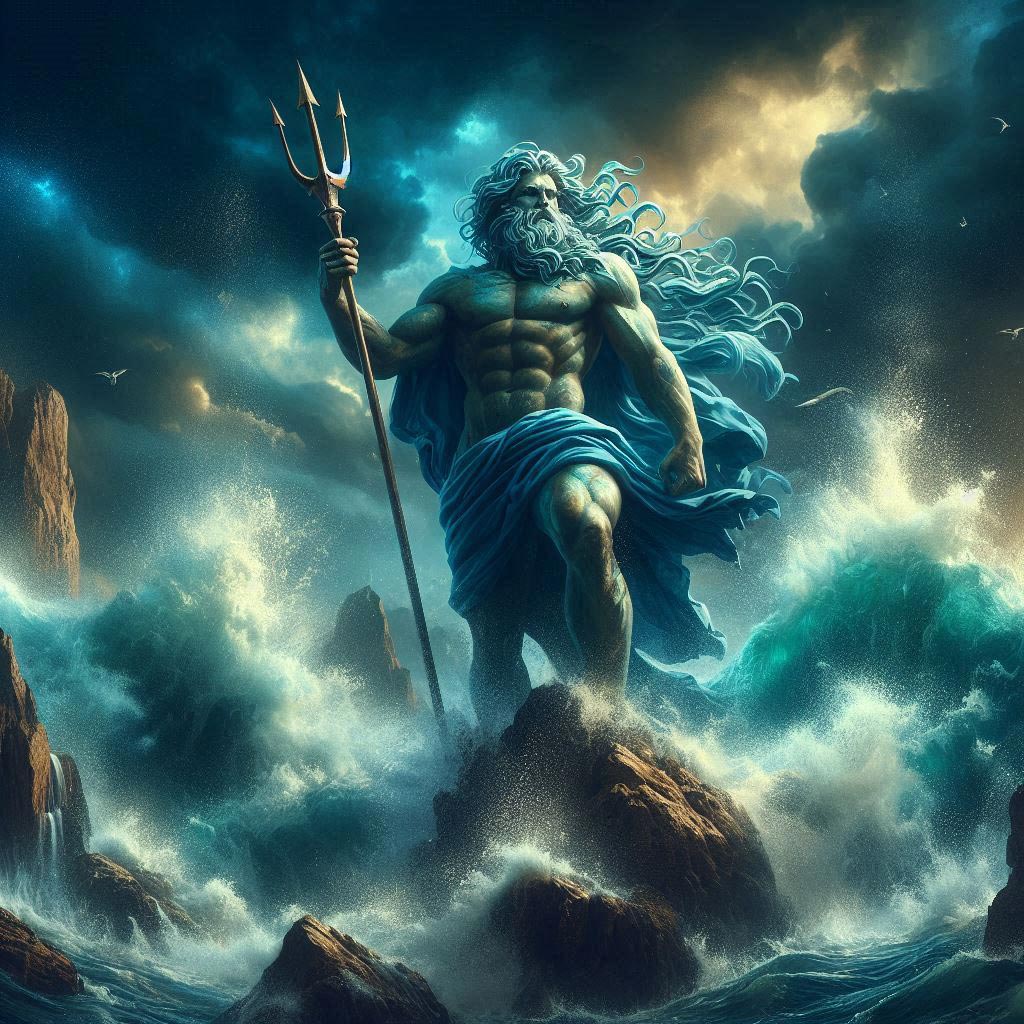
Poseidon (Latin: Neptune) ruled the sea, but limiting him to the sea misses much of his character. He was also associated with earthquakes and horses, and ancient Greeks knew him as a god capable of sudden destruction as well as protection.
For communities dependent on the sea, Poseidon was not an abstract mythological character. The sea could feed a community, carry ships to distant places and just as easily swallow them.
His rivalry with Athena over Athens is a famous example of the gods competing for the protection of a city. Athena offered the olive tree; Poseidon offered a source of salt water. The Athenians chose Athena, and the story became an explanation for the city’s divine patronage.
Poseidon’s anger is even more memorable in the Odyssey. After Odysseus blinds Poseidon’s son Polyphemus, the god turns the hero’s journey home into a prolonged ordeal.
There is also a strong connection between Poseidon and Corfu in Greek tradition. The ancient name Kerkyra was connected with Korkyra, a nymph loved by Poseidon, giving the island a place in the mythology of the sea god.
Dimitra (Demeter)

Demeter (Latin: Ceres) is often introduced simply as the goddess of agriculture. But the myth of Demeter and Persephone makes her much more than a personification of crops.
Demeter’s grief becomes a force capable of stopping the growth of the earth.
When Persephone disappears into the Underworld, Demeter searches for her and refuses to allow the earth to produce as it once did. The eventual compromise, in which Persephone spends part of the year with her mother and part with Hades, became closely associated with the changing agricultural cycle.
The story was also connected with the Eleusinian Mysteries, one of the most important religious traditions of ancient Greece. Initiates participated in secret rites connected with Demeter and Persephone, and the mystery religion was closely associated with questions of death, renewal and what might come after it.
Demeter therefore stands at a fascinating point between everyday survival and one of the deepest questions in Greek religion: what happens when life disappears?
Athena
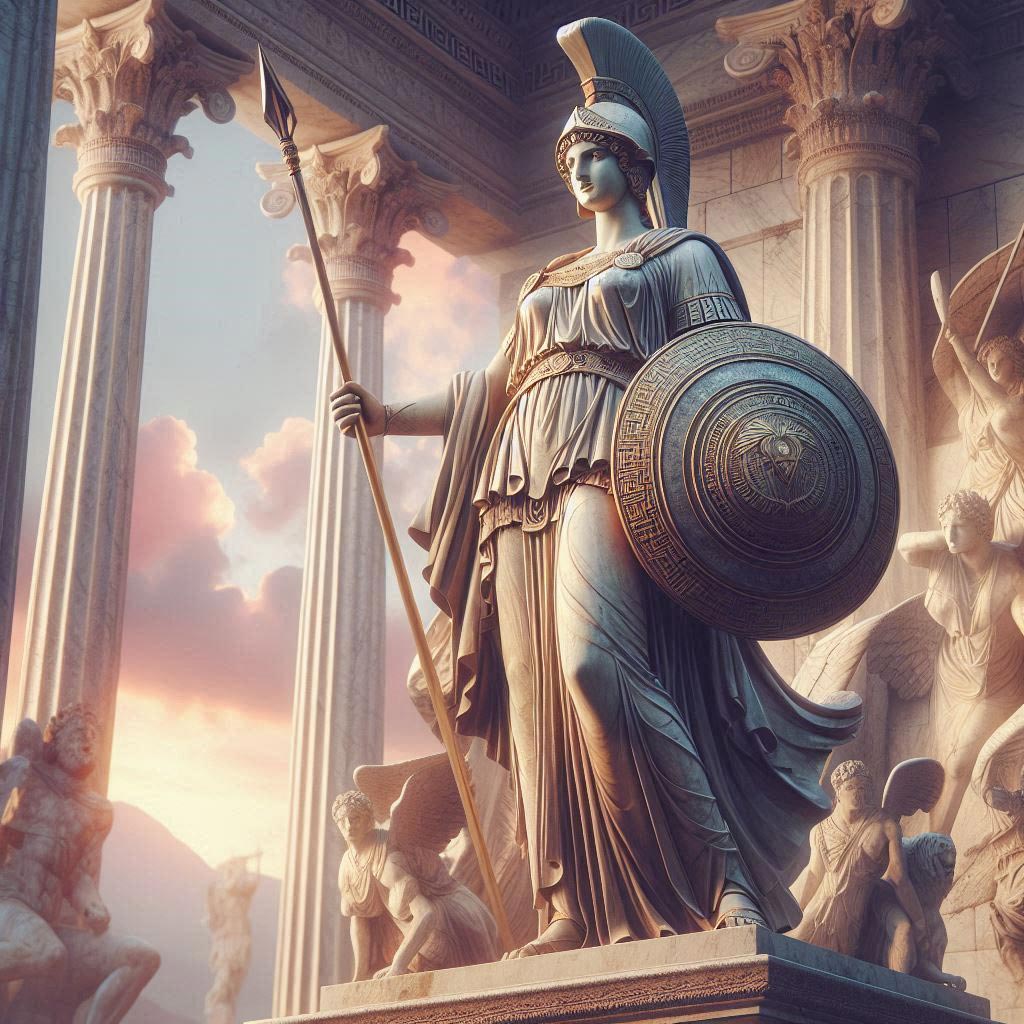
Athena (Latin: Minerva) was associated with wisdom, strategic warfare, crafts and the protection of cities. Her extraordinary birth — emerging fully armed from the head of Zeus — immediately marks her as a very different kind of deity.
Athena did not represent warfare in quite the same way as Ares. Where Ares is often associated with the violence and fury of battle, Athena represents strategy, discipline and the intelligence needed to prevail.
Her connection with Athens became one of the most famous divine relationships in Greek mythology. In the contest for the city’s patronage, Athena’s gift of the olive tree was preferred to Poseidon’s offering.
She also appears repeatedly beside heroes. Odysseus, in particular, benefits from the kind of intelligence and planning that Athena herself represents.
The owl became one of her familiar symbols, while her virginity distinguished her from goddesses whose myths revolve around marriage and sexual relationships.
Apollon (Apollo)
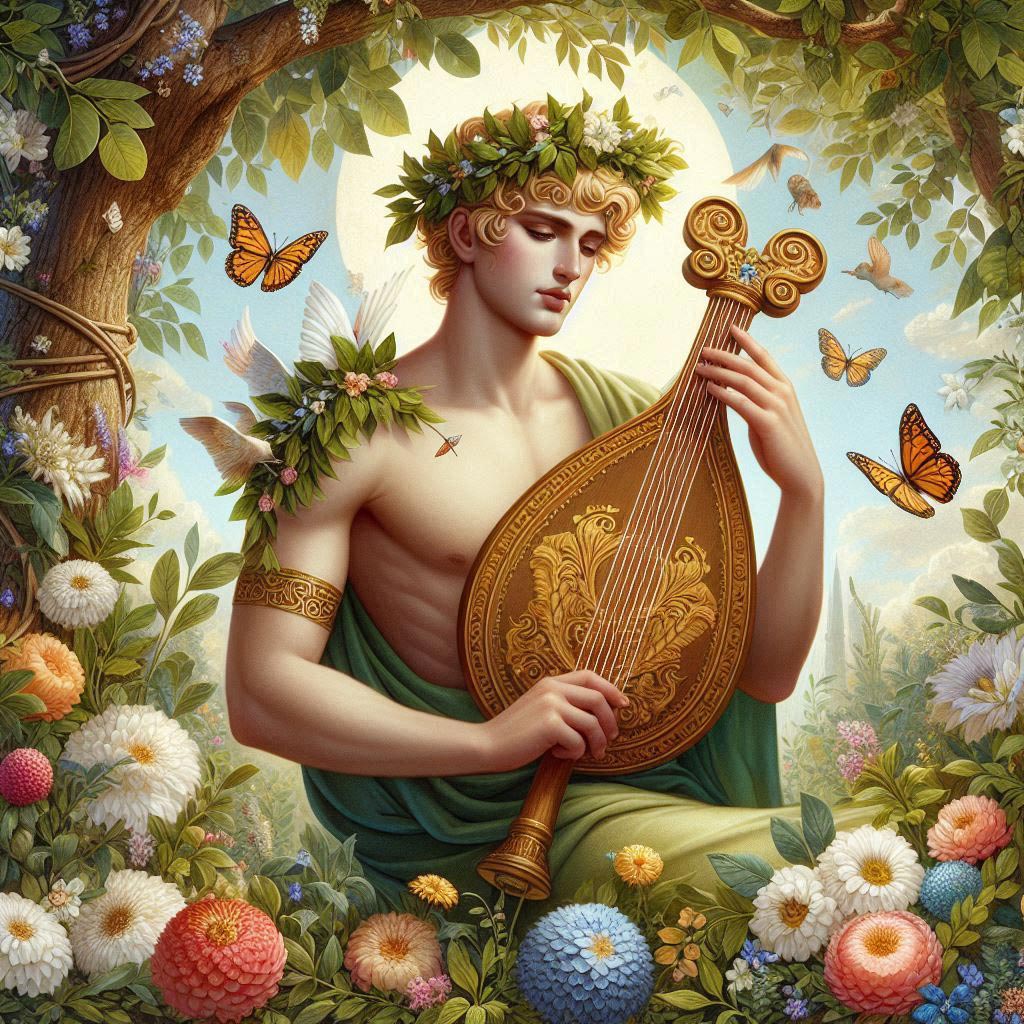
Apollo is one of the most wide-ranging gods in Greek mythology. He was associated with prophecy, music, poetry, healing and disease, archery and the ideal of youthful beauty.
He is often described today as the Greek sun god, but that description needs qualification. The ancient Greeks had a distinct personification of the sun in Helios. Apollo later became strongly associated with solar imagery, but his original and most important religious roles were broader.
His sanctuary and oracle at Delphi became one of the great religious centers of the Greek world. People and states sought Apollo’s guidance on questions ranging from personal affairs to major political decisions.
Apollo could heal, but he could also bring plague. His arrows were capable of carrying either destruction or protection.
That contrast is characteristic of the Olympians. The gods rarely fit comfortably into categories such as “good” and “evil.” Apollo’s power could preserve life or destroy it depending on how it was expressed.
Artemis
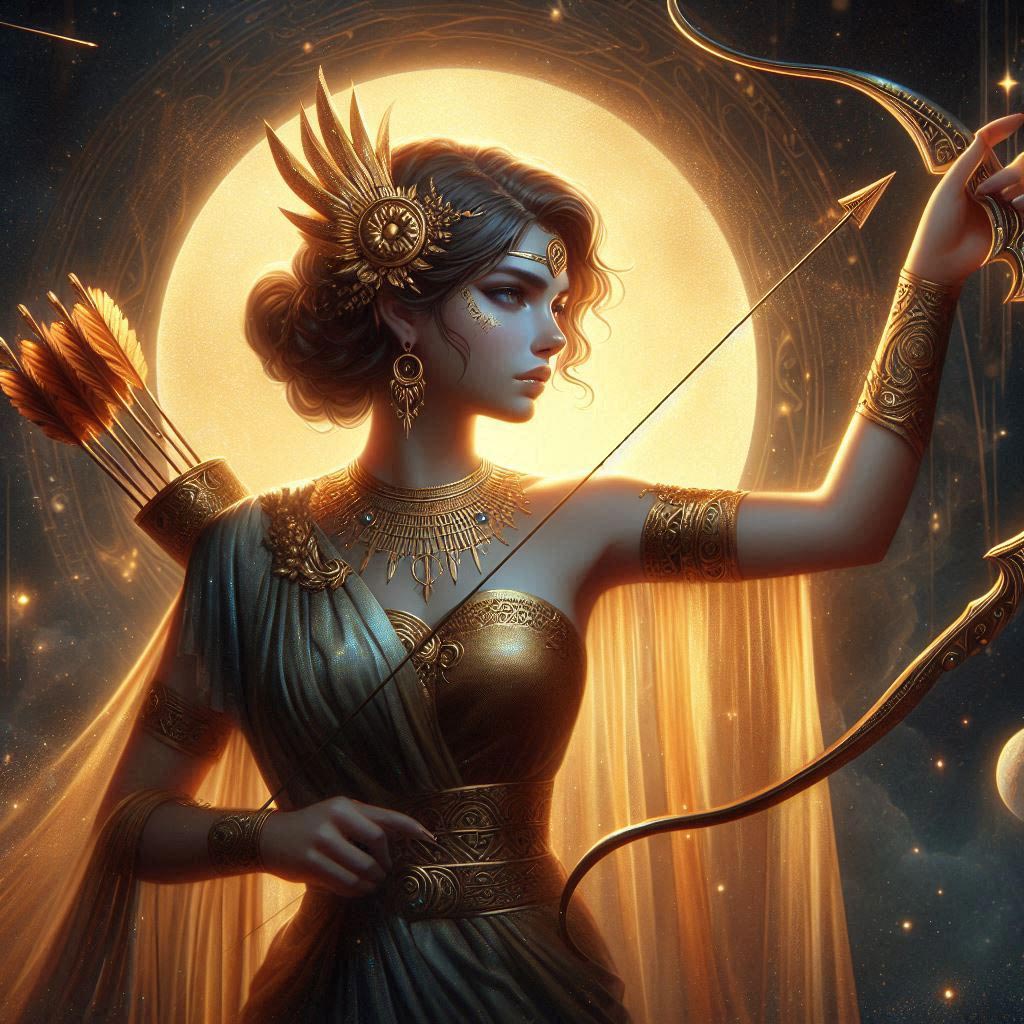
Artemis (Latin: Diana), twin sister of Apollo, was associated with hunting, wild animals, wilderness and the protection of young people. She was also connected with childbirth, an apparent contradiction that makes more sense when seen through the dangers surrounding women and children in the ancient world.
Artemis belongs to the wild places rather than the cultivated world. In myth she moves through forests and mountains with her companions, carrying a bow and maintaining a fierce independence.
She could protect animals and punish hunters who violated the boundaries associated with her.
Her virginity is an important part of her mythology. Like Athena and Hestia, Artemis is one of the virgin goddesses, but her particular form of independence is expressed through the wilderness and the hunt.
Although later tradition strongly associated Artemis with the moon, the moon goddess Selene was a distinct divine figure in Greek mythology. The association between Artemis and the moon became increasingly prominent over time.
Ares
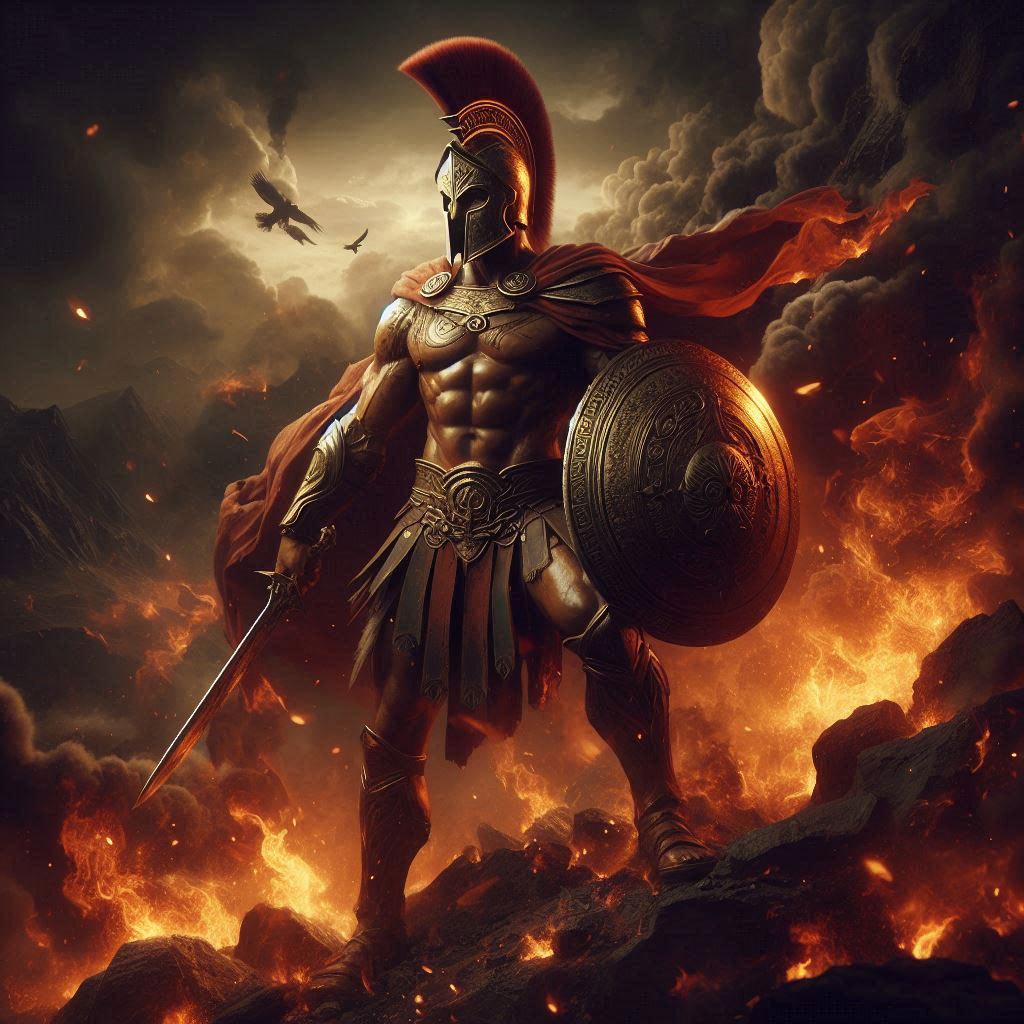
Ares (Latin: Mars) represents one of the most violent faces of war: the fury, bloodshed and confusion of the battlefield.
That does not make him simply the Greek equivalent of the Roman Mars. The two gods developed very differently in their respective religious traditions.
Ares often appears as a powerful but unsuccessful figure. Even Zeus is portrayed as disapproving of him, and in several myths Ares is defeated or humiliated.
His relationship with Aphrodite is one of the mythology’s more revealing combinations. The god of violent conflict and the goddess of desire become lovers, while Aphrodite’s husband Hephaestus responds by exposing them to the other gods.
Ares therefore represents something more complicated than “the god of war.” He is the violence of war stripped of the strategy and civic order that Athena represents.
Aphrodite

Aphrodite (Latin: Venus) is the goddess of love, sexual desire, and beauty, but her influence reaches far beyond the modern idea of romantic love.
There are different ancient traditions about her birth. In Hesiod’s Theogony, Aphrodite emerges from the sea after the castration of Ouranos. In Homer’s tradition, she is the daughter of Zeus and Dione.
That difference is a useful reminder of how Greek mythology actually worked. There was no single authoritative version of every myth.
Aphrodite’s power is demonstrated most dramatically in the story of the Trojan War. Her promise to Paris of the most beautiful woman in the world helps set in motion the chain of events leading to the war.
She was married to Hephaestus in some traditions, yet had a famous affair with Ares. The contrast between desire, marriage and social order runs through many of her myths.
Hephaestus
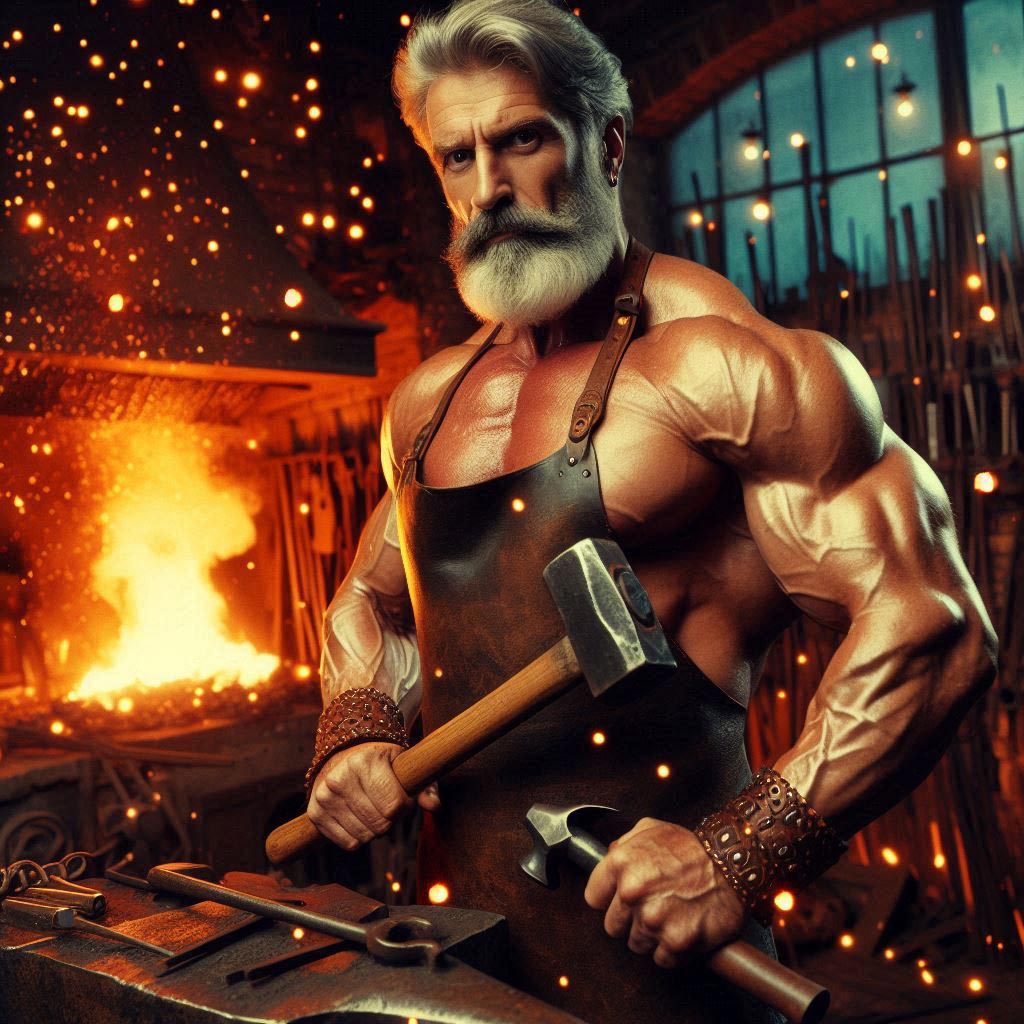
Hephaestus (Latin: Vulcan) is the divine craftsman of the Olympian world, associated with fire, metalworking and skilled craftsmanship.
His body is marked by disability, yet his skill is unmatched. He creates weapons, armor, jewelry and extraordinary objects for gods and heroes, including the famous armor made for Achilles.
Hephaestus occupies an unusual place among the Olympians. He is not a beautiful, youthful warrior or an imposing ruler. His power comes through making things.
His forge connects the divine world with the practical world of ancient craftsmen. Fire can destroy, but under the control of a skilled smith it can also transform raw material into something extraordinary.
That may be why Hephaestus feels surprisingly modern among the Olympians: his greatness comes not from birth or physical perfection, but from what he can create.
Hermes
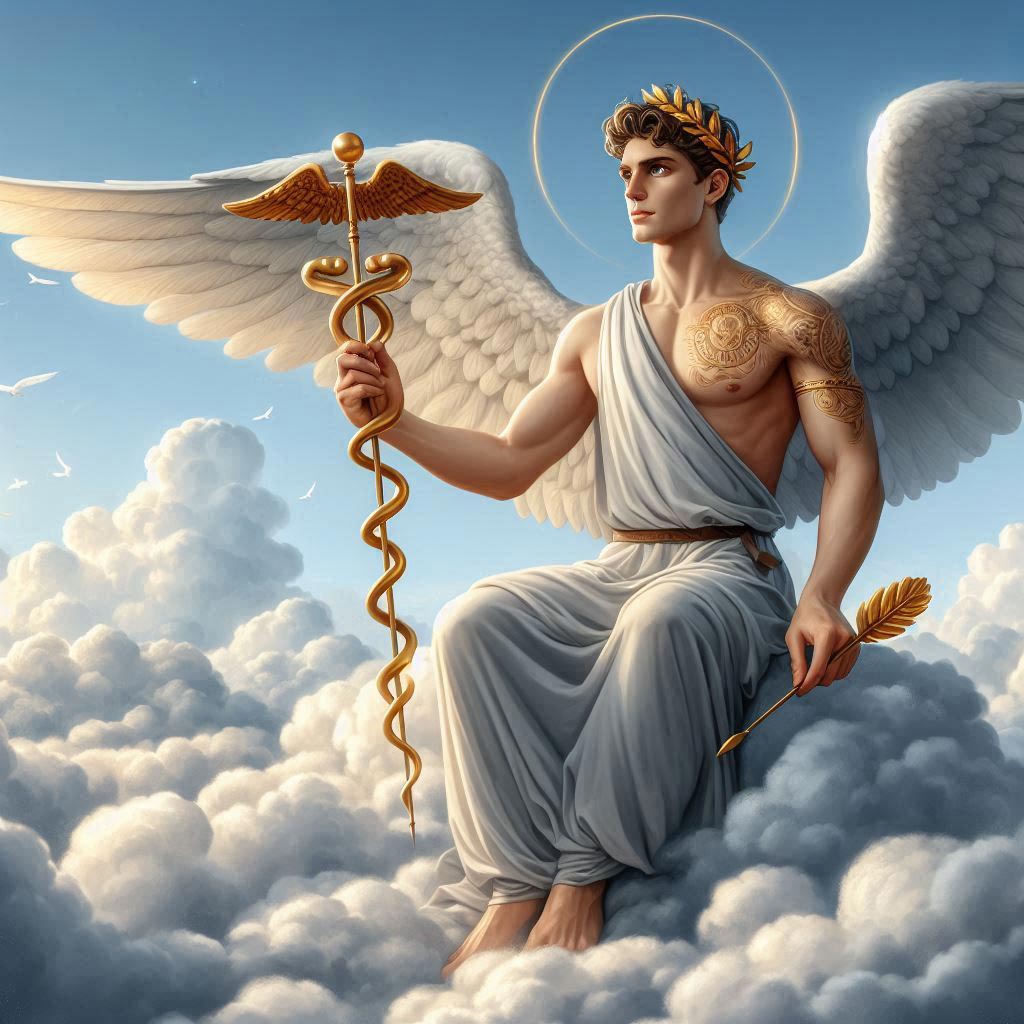
Hermes (Latin: Mercury) is the god who seems to belong everywhere.
He is the messenger of the gods, but also a patron of travelers, merchants and communication. He could move between worlds more freely than most divine figures, including serving as a guide for the dead on their journey to the Underworld.
Hermes is also a trickster.
One of his earliest myths tells how, still an infant, he stole Apollo’s cattle and then invented an elaborate explanation for the theft. His cleverness eventually earns him a place among the gods rather than simply punishment.
The winged sandals associated with Hermes capture something essential about him. He is a god of movement, boundaries and transitions — the divine figure who can cross from one place, social group or world into another.
Dionysus
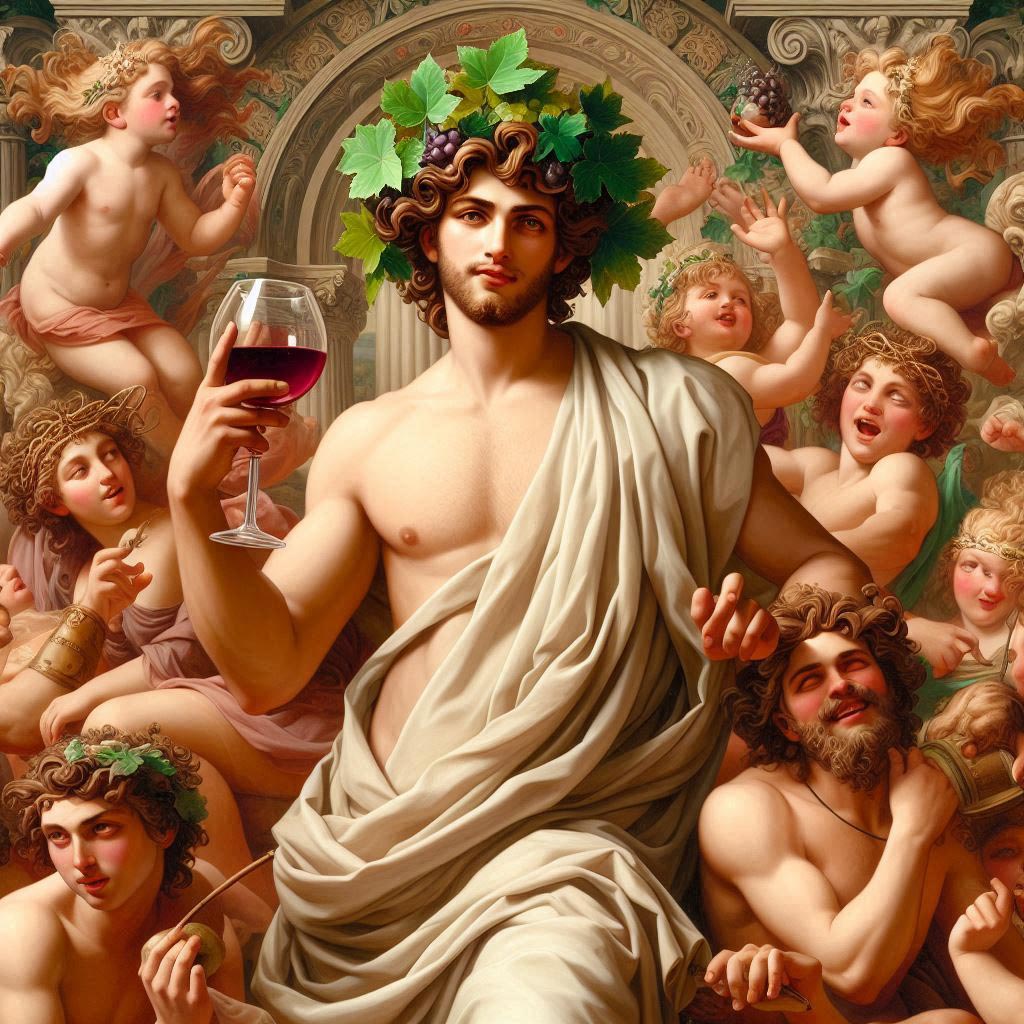
Dionysus (Latin: Bacchus) is perhaps the most disruptive member of the familiar Twelve.
He was the god of wine, but wine is only part of what Dionysus represents. His mythology explores ecstasy, altered states, theatre, ritual, fertility and the temporary breaking of ordinary social boundaries.
His birth itself crosses boundaries. He is the son of Zeus and the mortal Semele, making him divine yet closely connected with the human world.
His followers, particularly the maenads, appear in myths in states of religious frenzy. Satyrs also became closely associated with his world of wine, music and revelry.
Dionysus is sometimes presented as the newcomer who displaced Hestia from the Twelve. The ancient evidence is more complicated than the popular story suggests, and there is no need to imagine a literal twelve-seat council in which Hestia dramatically surrendered her chair.
What matters is that Dionysus eventually became one of the gods most commonly associated with the Twelve, while Hestia remained an enormously important goddess.
Main gods not living on Olympus
Hestia

Hestia (Latin: Vesta) was the goddess of the hearth, the center of both the household and the civic community.
She is one of the most frequently overlooked Greek gods precisely because her mythology is comparatively quiet. There are no great battles, dramatic love affairs or journeys like those of many of the other Olympians.
But the hearth was not insignificant.
Fire was central to the Greek household, and the communal hearth of a city had a corresponding religious importance. Hestia represented the fixed center around which everything else happened.
Hestia is sometimes included among the Twelve, while Dionysus takes her place in other familiar lists. The idea that she voluntarily gave up her seat to avoid a war among the gods is not supported by a standard ancient myth.
Her apparent absence from some lists therefore says little about her importance. A god did not have to belong to the Twelve to be fundamental to Greek religious life.
Hades
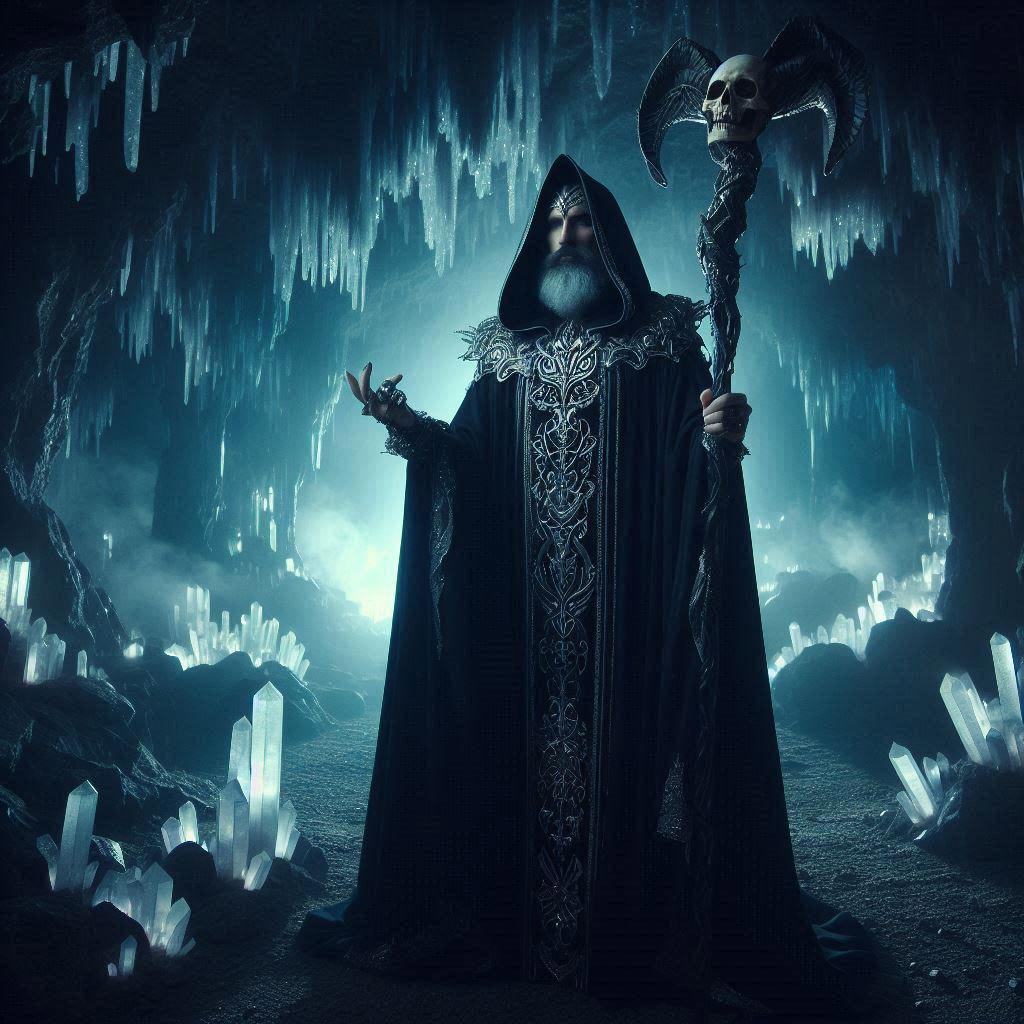
Hades (Latin: Pluto) is probably the most obvious name people expect to see when they search for the 12 Greek gods.
He was the brother of Zeus and Poseidon and one of the three sons of Kronos who divided the cosmos after the defeat of the Titans. Yet he normally does not appear in the list of the Twelve Olympians.
Why?
Because Hades ruled the Underworld.
The distinction is geographical and religious rather than a judgment about his importance. Hades was not a minor god who had somehow failed to qualify. He ruled an entire realm and exercised authority over the dead.
His kingdom was also more complicated than the popular image of a Greek hell. The Underworld contained different regions for different categories of dead, and Hades himself was not simply a personification of evil.
His Roman name Pluto, related to Plouton (“the wealthy one”), reflects another side of the god: the riches hidden beneath the earth.
His wife Persephone shares his realm and is herself a major divine figure, especially in the myths surrounding Demeter and the changing seasons.
So why is Hades not an Olympian?
The simplest answer is also the most useful: the Twelve were the Olympian group, while Hades ruled somewhere else.
So Who Are the 12 Olympians?
The familiar answer is:
Zeus, Hera, Poseidon, Demeter, Athena, Apollo, Artemis, Ares, Aphrodite, Hephaestus, Hermes and Dionysus.
But that list should not be treated as if it were carved into an ancient tablet.
In another context, Hestia may take Dionysus’s place. Other gods could be immensely important without ever belonging to the Twelve. Hades is the clearest example, while Persephone, Hecate and Helios demonstrate how misleading it can be to equate “Olympian” with “most important Greek god.”
The Twelve are better understood as a traditional grouping that became particularly prominent in Greek religion and later in the way we organize Greek mythology.
And perhaps that is why the question “Who really belongs among the Twelve?” is more interesting than simply memorizing twelve names.
Why the Greek Gods Still Matter
The lasting power of the Olympians does not come from their perfection. It comes almost entirely from the opposite.
Zeus can enforce order while repeatedly creating disorder in his own family. Hera protects marriage while trapped in a marriage marked by infidelity. Athena represents intelligence in war, while Ares embodies its violence. Aphrodite can bring love and disaster with the same irresistible force. Hephaestus creates beautiful things despite being an outsider among the beautiful gods.
Even the boundary between the Twelve and the gods outside them is revealing.
Greek mythology was not a neatly organized universe in which every deity had one job and one place. It was a collection of traditions that evolved across centuries, cities and communities. Gods overlapped, stories contradicted one another, and different places gave special importance to different divine figures.
That makes the Olympians feel less like a fixed cast of characters and more like a window into the way the ancient Greeks understood their world.
There was order, but also rivalry. There was beauty, but also violence. There was love, death, jealousy, craftsmanship, madness and wisdom.
This fluidity shows that Greek mythology was a living religion, not a rigid book. As Greek society and its borders changed, so did their gods. Today, the ruins of their temples across Greece stand as a testament to how these divine figures were adapted to fit the needs of different communities.
Note: The images on this page are AI-generated — we tried contacting the gods for original portraits, but Zeus never replied.