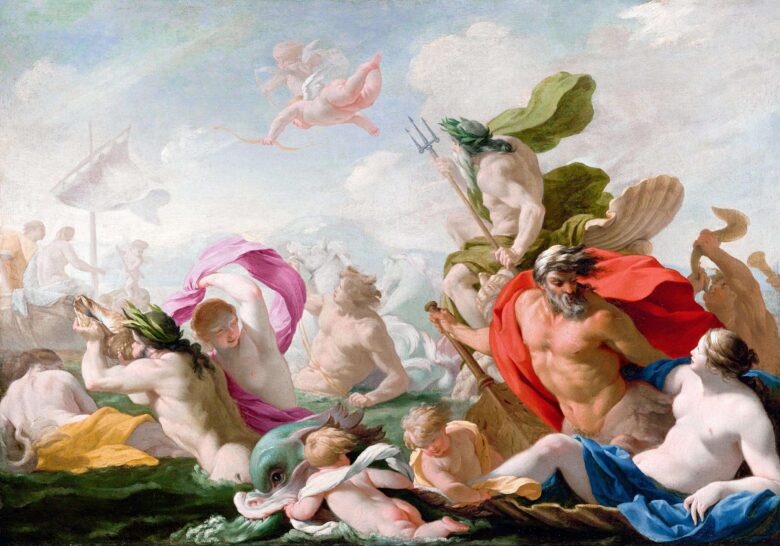
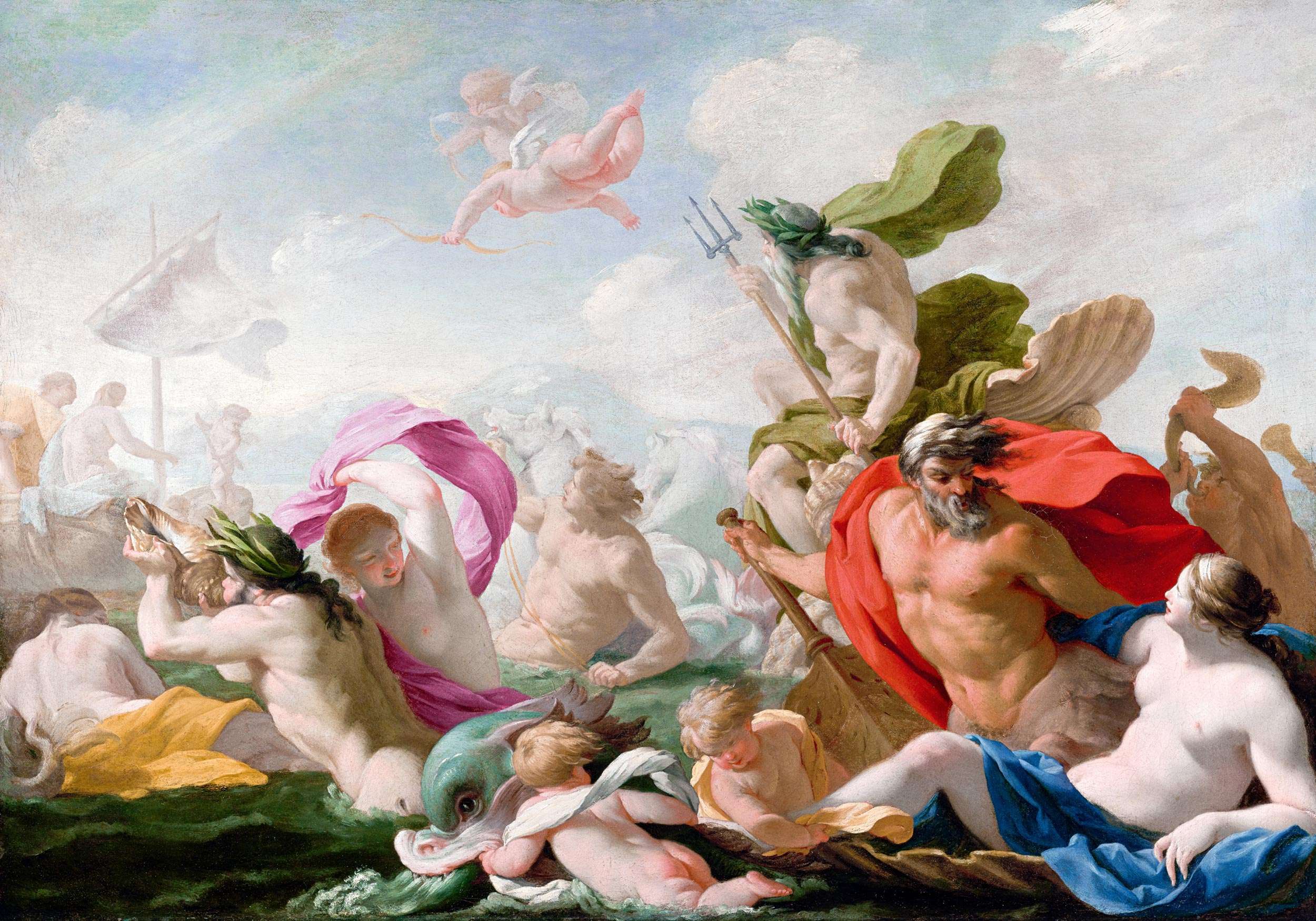
Greek mythology was never just a collection of abstract stories; it was a way of explaining the real world. The primordial forces of Chaos and Gaia were the dark void and the physical earth. The Olympians on Mount Olympus were the thunder and the sky. The monsters were the dangers of the sea and the wild. To understand the figures of Greek myth is to understand the landscape of Greece itself.
There is no single fixed list of all the figures in Greek mythology. Different ancient authors and traditions preserve different genealogies and stories, and some figures changed in importance or character over time. What follows is a guide to the principal figures and groups that make up the mythological world of ancient Greece.
Primordial Gods and Beings
The oldest figures in Greek mythology are the primordial beings, associated with the fundamental elements and conditions of the cosmos. In Hesiod’s Theogony, the story begins with Chaos, followed by figures such as Gaia, Tartarus, and Eros. From these early beings came further generations of gods.
Chaos is the first primordial being in Hesiod’s account, representing the original gap or void. Gaia is the Earth, while Tartarus is the deep abyss beneath the world. Eros represents the force of attraction and generation. Other important primordial figures include Nyx (Night), Erebus (Darkness), Uranus (Sky), and Pontus (Sea).
These beings are different from the later Olympian gods. They belong to the mythological explanation of how the cosmos itself came into being.
The Titans
The Titans are the divine generation that came before the Olympians. The most important were the children of Uranus and Gaia, although later traditions also associate other figures with the Titan generation.
Cronus became the ruler of the Titans after overthrowing Uranus. His sister Rhea became his wife, and their children included Zeus, Hera, Poseidon, Hades, Demeter and Hestia. Other major Titans included Oceanus, Hyperion, Themis and Mnemosyne.
The conflict between Cronus and his children culminated in the Titanomachy, the war in which Zeus and his allies challenged the older generation. The victory of Zeus established the Olympian gods as the dominant divine generation.
Some Titans, however, remained important in later mythology. Prometheus, for example, became one of the most famous figures in Greek myth through his association with humanity and fire, while Atlas was condemned to bear the heavens.
The Olympian Gods
The Olympians are the best-known group of Greek gods. They were associated with Mount Olympus and with the divine order established under Zeus after the Titanomachy.
The traditional Twelve Olympians are usually listed as:
- Zeus – king of the gods and god of the sky, thunder, and divine authority.
- Hera – goddess of marriage and queen of the gods.
- Poseidon – god of the sea, earthquakes and horses.
- Demeter – goddess of agriculture and the harvest.
- Athena – goddess of wisdom, strategic warfare and crafts.
- Apollo – god associated with prophecy, music, healing, archery and the arts.
- Artemis – goddess of the hunt and associated with wild nature and childbirth.
- Ares – god of the violent and destructive side of warfare.
- Aphrodite – goddess of love and beauty.
- Hephaestus – god of fire, metalworking and craftsmanship.
- Hermes – messenger of the gods and god of travel, trade and communication.
- Dionysus – god of wine, theatre, celebration and ecstatic worship.
Hestia is sometimes included among the Twelve instead of Dionysus. Hades, although one of the most important gods, is generally not counted among the canonical Twelve Olympians because his realm was the Underworld.
Other Gods and Goddesses
Greek mythology extends far beyond the Olympian Twelve. Many other gods and goddesses had important roles in particular places, cults, natural forces or areas of human life.
- Hades – ruler of the Underworld and god of the dead and its hidden wealth.
- Persephone – daughter of Demeter and queen of the Underworld.
- Hecate – goddess associated with crossroads, night, magic and the boundaries between worlds.
- Pan – god of shepherds, flocks, wild places and the untamed countryside.
- Nike – personification and goddess of victory.
- Nemesis – associated with retribution and the restoration of balance in response to excessive pride or wrongdoing.
- Tyche – goddess or personification of fortune and chance.
- Eris – goddess of strife and discord.
- Eros – a primordial force in some traditions and, in later mythology, a youthful god associated with desire and love.
The boundaries between these categories were not always rigid. Greek mythology developed over centuries, and the importance and character of individual deities could vary between authors, regions, and periods.
Heroes and Demigods
Heroes occupy a special place in Greek mythology. Unlike the gods, they are generally mortal or partly mortal, yet their exceptional abilities, adventures or ancestry give them a place beyond ordinary human life.
- Heracles – the greatest Greek hero in many traditions, famous above all for his Twelve Labors.
- Perseus – the hero who killed Medusa and rescued Andromeda.
- Theseus – Athenian hero who defeated the Minotaur in the Cretan labyrinth.
- Achilles – the central Greek warrior of the Iliad, celebrated for his extraordinary strength and doomed fate.
- Jason – leader of the Argonauts in the quest for the Golden Fleece.
- Bellerophon – hero who defeated the Chimera while riding the winged horse Pegasus.
- Orpheus – legendary musician whose journey into the Underworld became one of Greek mythology’s most enduring stories.
These stories are rarely simple tales of victory. Greek heroes often achieve extraordinary things while suffering from pride, fate, violence, betrayal or the consequences of their own actions.
Explore the great heroes of Greek mythology
Nymphs, Muses and Other Divine Beings
Not every supernatural figure in Greek mythology was a major god. A vast population of lesser divine beings inhabited particular places, natural features and aspects of life.
Nymphs
Nymphs were female nature spirits associated with particular environments. Naiads belonged to freshwater, Dryads to trees and forests, Nereids to the sea, while Oreads were associated with mountains. The Oceanids were daughters of the Titan Oceanus and were associated with bodies of water.
The Muses
The nine Muses were daughters of Zeus and Mnemosyne. They became the divine patrons of different forms of artistic and intellectual activity:
- Calliope – epic poetry
- Clio – history
- Erato – lyric and love poetry
- Euterpe – music and lyric poetry
- Melpomene – tragedy
- Polyhymnia – sacred poetry and hymns
- Terpsichore – dance
- Thalia – comedy
- Urania – astronomy
Other Divine Beings
The Moirai, or Fates, were associated with the destiny allotted to each mortal. The Horae represented aspects of order, seasons and the proper rhythm of life. Satyrs were wild male nature spirits associated with Dionysus, while Centaur traditions combined human and animal forms and produced figures ranging from the violent to the wise, such as Chiron.
Monsters and Legendary Creatures
Greek mythology is equally famous for its monsters. Some were enemies of heroes, some guarded places or treasures, and others represented forces that lay beyond the boundaries of ordinary human life.
- Medusa – the most famous of the Gorgons, whose gaze could turn a person to stone.
- The Gorgons – monstrous female figures traditionally named Stheno, Euryale and Medusa.
- Typhon – a gigantic and terrifying adversary who challenged Zeus and the Olympian order.
- Echidna – a monstrous female figure associated in later genealogical traditions with several famous monsters.
- Cerberus – the multi-headed hound guarding the entrance to the Underworld.
- Hydra – the many-headed serpent defeated by Heracles.
- Chimera – a fire-breathing composite creature defeated by Bellerophon.
- Minotaur – the half-man, half-bull creature kept in the Cretan labyrinth.
- Harpies – winged female beings associated with sudden disappearance and punishment.
- Centaurs – horse-human beings whose stories range from savage violence to the wisdom of Chiron.
Some creatures became particularly important because they were defeated by heroes. The encounter between a hero and a monster often marks a boundary: the hero enters a dangerous or unfamiliar world and returns having gained fame, knowledge or a place in legend.
How the Mythological World Fits Together
Greek mythology is easier to understand when its generations are seen as a connected story rather than as an isolated collection of gods and monsters.
The primordial beings establish the foundations of the cosmos. The Titans represent the next divine generation and rule before Zeus. The Olympians then establish a new order after the Titanomachy. Around them exists a much larger world of gods, spirits, nymphs, heroes and monsters.
But Greek mythology was never a single, perfectly organized system. Homer, Hesiod and later poets tell different versions of some stories, while local traditions could give particular gods or heroes different importance. The apparent contradictions are therefore part of the history of Greek mythology rather than something that can always be resolved into one official genealogy.
To see how these figures were tied to the real world—the mountains, the sea, and the earth beneath Greece—explore our three realms:
- The Sky: Zeus, Mount Olympus, and the Divine Order
- The Sea: Poseidon, Seafaring, and the Aegean
- The Underworld: Hades and the Chthonic Traditions