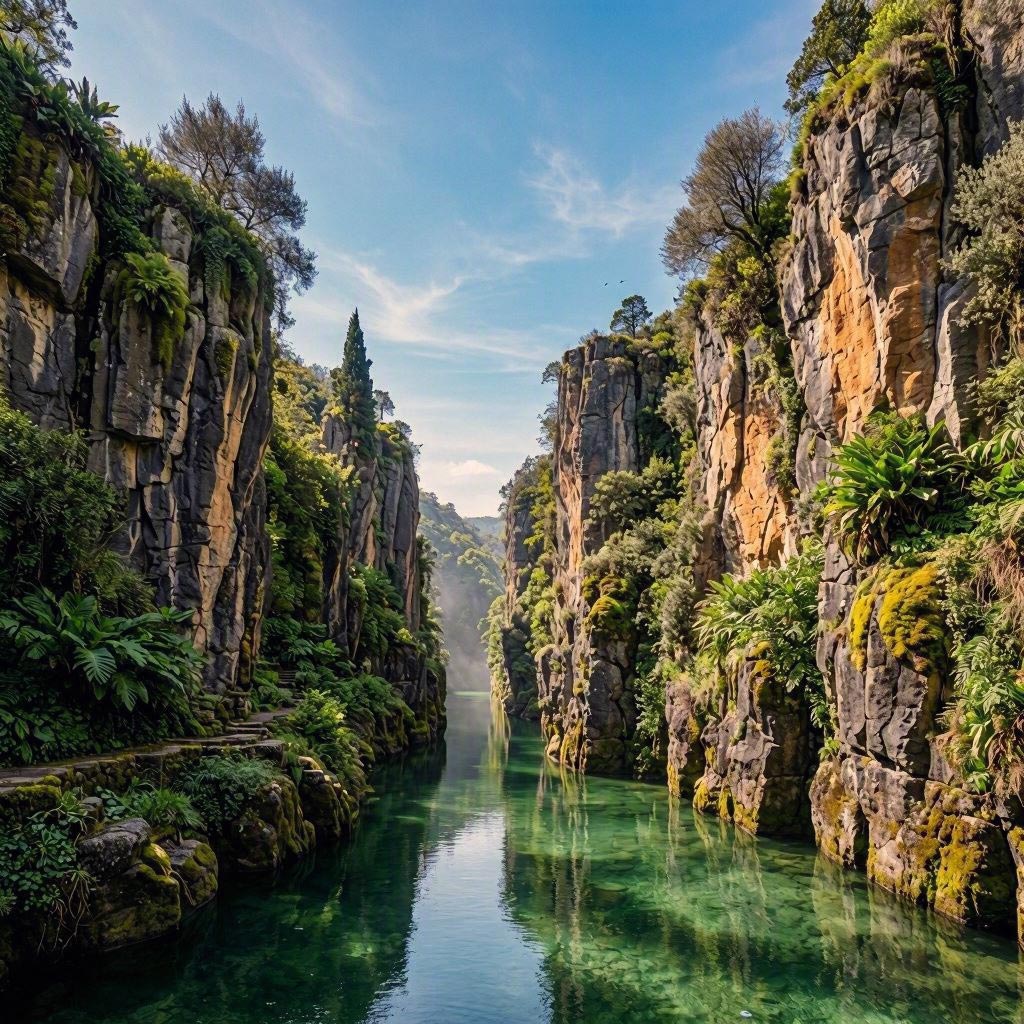
In the mountains of Epirus, on the banks of a dark river called the Acheron, the ancient Greeks built a place where they believed the living could speak to the dead. It was called the Nekromanteion, the Oracle of the Dead. Unlike Delphi, where you asked Apollo about the future, here you asked the dead about the past. What you got was not prophecy. It was a conversation with someone who had already crossed the final boundary.
Where the Underworld Meets the Earth
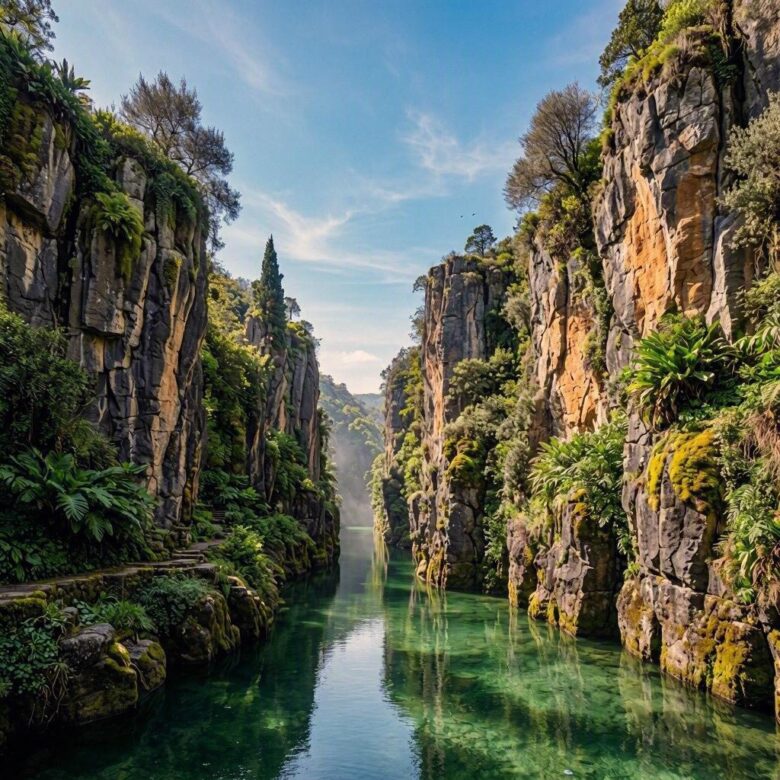
The Acheron is a real river. It flows through the gorges of Epirus, on the mainland across from Corfu, and its waters are cold, fast, and dark. The ancient Greeks believed this river was one of the five rivers of Hades. Its name means “river of woe.”
Near the confluence of the Acheron and two other rivers, the Pyriphlegethon and the Cocytus, a hill rises above the valley. On that hill, archaeologists found the ruins of a large, fortified complex. In 1958, the Greek archaeologist Sotirios Dakaris identified it as the Nekromanteion, the Oracle of the Dead described by Homer and Herodotus.
The Ritual: How the Greeks Spoke to the Dead
The ritual at the Nekromanteion was not for the faint of heart. According to the ancient sources, pilgrims arrived after days of purification. They were fed special foods, bathed in the river, and prepared for days before the consultation.
The center of the site was a maze of dark corridors and a vaulted underground chamber. The pilgrims were led into the chamber, which was pitch black. Then, the priests began the ritual. The dead were summoned. The pilgrims heard voices. They saw shadows. They spoke to the dead.
Modern scholars believe the priests used a combination of stagecraft and psychology. The underground chamber had hidden passages and a system of pulleys and mirrors. The priests could speak in voices that seemed to come from the earth. They could create shadows that looked like spirits. They used the darkness, the isolation, and the fear of the pilgrims to create an experience that felt real.
Whether it was magic or theater, the Greeks believed it. The Nekromanteion was one of the most important religious sites in the ancient world.
The Debate: Was It Really the Oracle of the Dead?
Not everyone accepts Dakaris’s identification. In 1979, the German archaeologist Dietwulf Baatz examined the finds from the site and noticed something strange: among the debris were parts of third-century BCE catapults. Catapults were military weapons. Why would a religious sanctuary have catapults?
Baatz argued that the building was not a sanctuary at all. It was a fortified Hellenistic farmstead. The underground chamber was a cistern. The maze of corridors was a storage area. The site was burned by the Romans in 167 BCE, during their war with Macedon, and abandoned.
A 2022 paper suggested yet another possibility: a fortified trading station. The debate is still open. Some archaeologists believe the site was a sanctuary that was later fortified. Others believe it was never a sanctuary at all.
What You Can See Today
Whatever the truth, the site is open to visitors. You can walk through the ruins, see the underground chamber, and stand above the Acheron. The river is still there. The darkness is still there. The fear is still there.
If you visit, remember what the Greeks believed: the dead are not gone. They are just on the other side of the river. The Nekromanteion was the place where the living could call across the water.
Why This Matters Today
The Nekromanteion is not just an archaeological curiosity. It is a window into how the ancient Greeks understood death. They did not see death as an end. They saw it as a journey to another place, a place you could visit, a place you could speak to.
Modern Greece still carries this tradition. The Orthodox Christian practice of memorial services, the annual visits to the graves of the dead, and the belief that the dead are still present in the lives of the living are all echoes of the ancient belief that the boundary between life and death is thin.
The Nekromanteion is where that boundary was thinnest of all.
Explore the Underworld
- Hades and the Underworld Tradition in Greece — the pillar page for this realm.